The Selborne Dry Dock is a critical naval infrastructure asset responsible for vessel refitting, repair and modernisation. Central to its operation are two penstock doors that regulate the controlled flooding and dewatering of the dock ensuring safe and efficient docking procedures for South African Navy vessels.
The refurbishment was initiated after one of the penstock doors failed during routine inspection and testing. The failure was linked to aged infrastructure and material breakdown at a critical joint. Following the incident the affected door was isolated and the dock secured with assistance from South African Navy divers who installed a temporary steel sea pad to maintain operational safety.
Dockyard engineers undertook a carefully coordinated recovery and refurbishment process to ensure minimal disruption to ongoing naval maintenance schedules. The operation required precise timing to avoid impacting active docking activities at the facility.
Equipped with extensive experience in marine engineering support the Dockyard team removed the penstock door using heavy lifting crane and rigging systems before transporting it to the maintenance workshop for full refurbishment. The scope of work also included renewal of access ladders and platforms within the penstock pit to improve long-term safety and maintainability.
Once refurbishment was complete the penstock door was reinstalled and commissioned back into service restoring full operational capability to the Selborne Dry Dock flooding system. The successful completion of the project demonstrates Dockyard’s ability to maintain and restore critical naval infrastructure under constrained resources.
LEAD VESSEL DOCKS FOR THE FIRST TIME
In parallel with infrastructure upgrades Armscor Dockyard also achieved a significant operational milestone with the first successful syncrolift docking of SAS King Sekhukhune I a multimission inshore patrol vessel (MMIPV).
Delivered in May 2022 by Damen Shipyards Cape Town the vessel is the lead ship of a new class built for the South African Navy. The successful docking at the syncrolift facility in Simon’s Town represents a major step forward in supporting the evolving maintenance requirements of modern naval platforms.
Unlike traditional graving dock operations the syncrolift system introduces greater logistical flexibility reduced docking times and improved operational efficiency. However it also presents increased technical complexity requiring specialised planning and engineering support.
Dockyard and South African Navy Engineering Services launched a collaborative engineering programme in January 2025 to develop a dedicated docking solution for the MMIPV class. The project focused on designing a specialised docking cradle capable of accommodating the vessel’s configuration and enabling stern-first docking operations.
The design process involved multiple iterations of engineering simulation and technical review with continuous input from both Dockyard specialists and Navy engineering teams. Once final approval was granted materials were procured and fabrication commenced.
The completed docking cradle was subject to rigorous inspection and formally signed off by South African Navy Engineering Services and the Dockyard Dock Master before deployment. The successful docking of SAS King Sekhukhune I marks the culmination of months of planning design and precision engineering.
This achievement highlights Dockyard’s ability to adapt infrastructure and procedures to meet the requirements of next-generation naval vessels while maintaining safe and reliable operational standards.
NEW EQUIPMENT TO IMPROVE EFFICIENCY AT DOCKYARD
Armscor Dockyard has also undertaken a significant modernisation programme aimed at improving operational efficiency safety and long-term sustainability through the acquisition of new mobile equipment and refurbishment of existing assets.
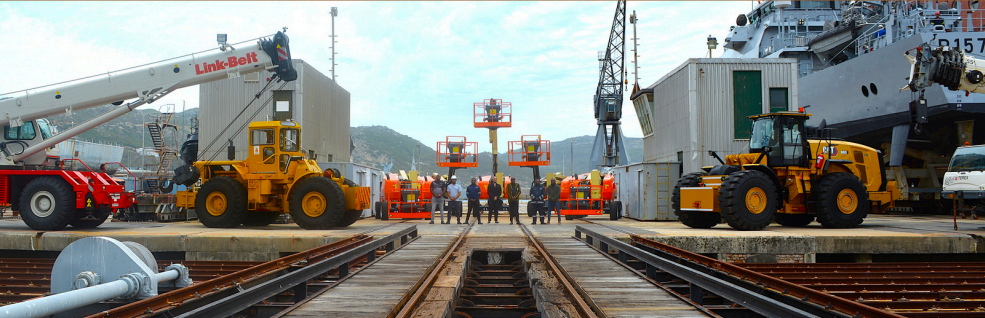
For several years the Dockyard has operated under increasing pressure from an ageing fleet of critical support equipment including forklifts cherry pickers and ship-handling machinery. Some assets have exceeded their intended service life resulting in reliability challenges and increased maintenance demands.
To address these constraints Dockyard has introduced a new Caterpillar 980 wheel loader to support vessel handling operations on the syncrolift system along with five 16-metre JLG Industries cherry pickers for elevated maintenance work and three Toyota forklifts to strengthen materials handling capability.
In addition two existing cranes have been rehabilitated and returned to certified operational service after more than five years out of operation increasing the total number of serviceable mobile cranes to three and significantly improving lifting resilience across the facility.
All new equipment has been procured with comprehensive maintenance support agreements to ensure long-term reliability and lifecycle management. Training programmes are also being implemented for Dockyard personnel and South African Navy staff to ensure safe and effective operation of the upgraded equipment while enhancing technical skills within the organisation.
This investment reflects a broader commitment to sustaining Dockyard’s operational readiness and ensuring continued support to the South African Navy through improved infrastructure modern equipment and strengthened engineering capability.