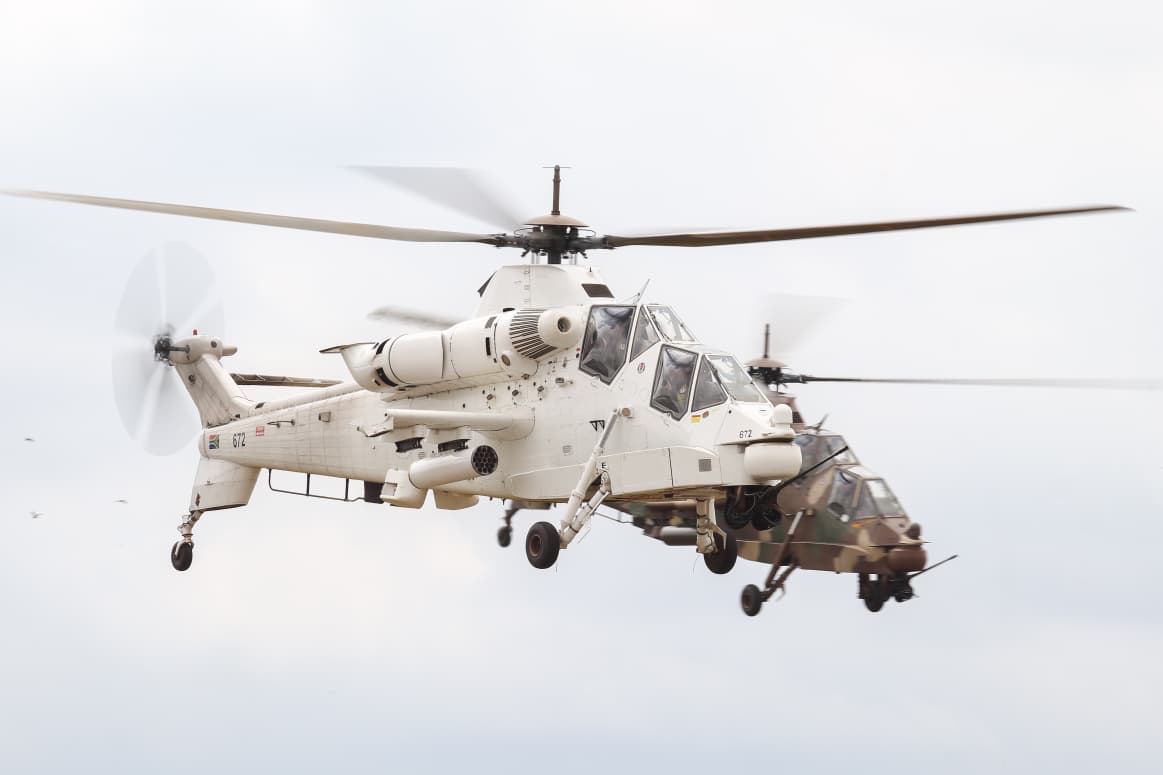
The fundamental peacetime purpose of armed forces is to deter aggression and to protect vital and perhaps key national interests against military and paramilitary threats. The latter include guerrilla or terrorist attacks, internal or sponsored by another country, and criminal actions of paramilitary nature, such as piracy.
Helmoed Römer Heitman
The fundamental peacetime purpose of armed forces is to deter aggression and to protect vital and perhaps key national interests against military and paramilitary threats. The latter include guerrilla or terrorist attacks, internal or sponsored by another country, and criminal actions of paramilitary nature, such as piracy.
In South Africa’s case we could consider vital interests as being the security of the Highlands Water Scheme in Lesotho, and the Cahora Basa power station, gas fields and Maputo port in Mozambique, to the functioning of the country. A key national interest could be the security of the Mozambique Channel, which is an important shipping route for South Africa’s oil imports and exports to the Mediterranean, Persian Gulf and western seaboard of India. Assuming trade with Africa increases, West African waters would also become an important national interest.
Armed forces are also often tasked with enforcement of national sovereignty – border and maritime zone protection (including fisheries), air space surveillance and air policing, all but the aerial tasks being among the original roles of armed forces. Some countries have distinct forces for those roles – such as border guards and coast guards – but that is only practical for countries that can afford separate forces, or if they are part of the armed forces just reporting to another ministry in peacetime, so avoiding unnecessary empire building.
There is no reason, for instance, why a navy could not have a civilian-crewed coast guard branch, whose personnel are also reservists and so become part of the navy proper in wartime. Similarly, a border guard could be organised, trained and supported by the army but in peacetime report to home affairs, reverting to army command in wartime with primary tasks such as rear area security, screening in difficult terrain and the like.
While these are all military roles and tasks, the armed forces provide governments with an immensely flexible tool set able to handle a wide range of other tasks in peacetime, tasks beyond the capabilities of other parts of government. Perhaps something like a national level “Swiss Army knife”. In most cases they are called on in emergencies but there is potential beyond that.
Internal security
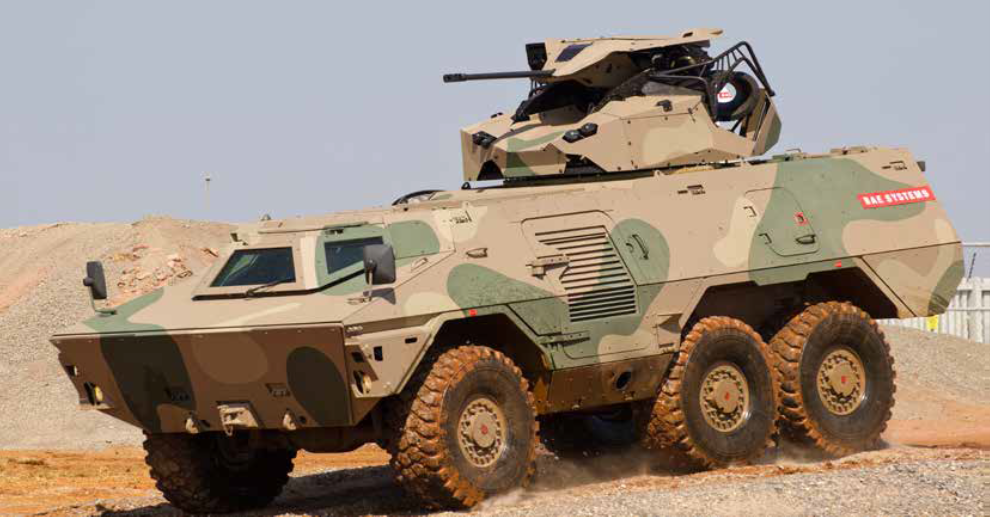
Peacetime roles of the armed forces can include the protection of vital infrastructure, security and even provision of vital services during times of instability, and support to the police.
An example of the former would be the deployment of SA Army troops to protect power stations, another being the deployment of troops to back up police in protecting airports in some European countries after terrorist attacks in 2017. Examples of the second might be the deployment of SA Military Health Service personnel to hospitals during strikes and Britain’s use of military personnel during a strike by firefighters in 2002.
Support to the police can be limited to such tasks as air transport to facilitate quick deployment of police elements, logistic and medical support and aerial surveillance. Troops can, however, also be deployed under the direction of the police, but under command of their own officers, for riot control and to directly support police in major anti-crime operations, for instance to cordon off an area for searches by the police and to protect police search teams. One example would be the 3,300 SA Army personnel deployed to assist the police in dealing with illegal mining; another example would be the deployment of several thousand troops during the July 2021 looting. The SANDF has also provided security during elections and for events such as the Rugy World Cup in 2010. The latter included Gripen fighters, Army air defence radars and the air surveillance radars of the navy’s frigates for air space control and air policing.
The internal security roles, and particularly riot control, are not much liked by armed forces, which are neither organised nor fully trained for such tasks but are accepted as a necessity in situations beyond the unassisted capability of the police, mostly when the police cannot muster or deploy the numbers of personnel needed or when specialised capabilities are required, such as air policing.

Disaster and emergency response
The most valuable assets in a major disaster or emergency will be organised personnel, command and control systems and communications links. The armed forces can provide those, can generally do so at short notice and generally have the logistic back-up to sustain such a deployment.
The armed forces also have equipment that can be utilised in such situations, with transport assets often the most valuable. Helicopters can deploy rescue and medical teams and deliver supplies to inaccessible areas and lift out injured survivors. Transport aircraft can fly rescue and medical teams into small airfields and airstrips, and can parachute supplies to isolated communities, as in Somalia and South Sudan and, most recently, in Bougainville after a volcanic eruption. Supplies can also be dropped without parachutes to simplify collection on the ground. In critical situations rescue and medical personnel can be parachuted in to provide immediate assistance. Military helicopters can also be a key element in fighting bush fires, as the SA Air Force has done many times.
The 2000 flood disaster in Mozambique is a good example of an extreme situation. SA Air Force helicopters rescued more than 14,000 people off roofs, the tops of buses and out of trees, while transport aircraft flew in more than 2,600 tons of supplies and helicopters distributed them. The Air Force also hosted foreign aircraft to help and handle air traffic control over the disaster area. Medical personnel were deployed to assist survivors as necessary.
Warships, particularly landing platforms with helicopters and landing craft, can deploy rescue and medical teams, deliver supplies, produce fresh water, evacuate survivors and, if they can come alongside, provide some electrical power. Naval vessels were key to rescue efforts after the 2004 Indian Ocean Tsunami.
And, of course, simple military off-road trucks can be key to getting rescuers and supplies into disaster hit areas and armies are used to organising the movement of large numbers of vehicles.
Army engineers have the equipment and the skills to rescue people trapped by collapsed buildings, open washed away or blocked roads, place temporary bridges, repair dikes, restore basic water and electricity supplies and demolish structures rendered dangerous by earthquake or flood damage. Signals personnel can provide emergency communications links and medical personnel can help survivors on site and establish field hospitals to provide more comprehensive assistance until the civilian health services can be restored. Technical personnel can repair vehicles and equipment of most kinds, and today most armed forces have information technology specialists who can help restore related services.
There are also capabilities less obvious in this context: Reconnaissance and surveillance aircraft and unmanned aerial vehicles can monitor fire and flood lines and locate survivors in inaccessible areas. In a particularly unusual case, German Army Fennek reconnaissance vehicles used their thermal imagers to identify weak spots in dikes at risk during floods.
These are all capabilities that, in most countries, only the armed forces can generate and deploy at short notice and then sustain until the situation stabilises.
Combat troops can also be part of such efforts, one example being Operation Restore Hope in Somalia in 1992/3, when troops and armoured vehicles had to be deployed to protect food convoys against well-armed bandits, and warships had to escort the World Food Programme ships to guard against pirate attacks.
Search and rescue
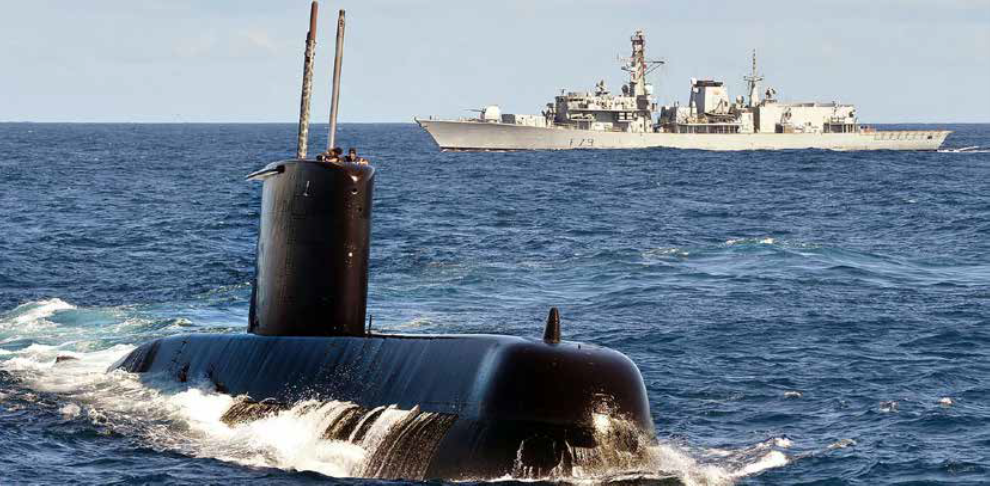
The search and rescue role of the armed forces is well known in most countries, particularly sea and mountain rescue operations. Consider just some South African examples. The 1991 sinking of the cruise ship Oceanos saw 221 people hoisted off the ship by SA Air Force helicopters flying from a hastily established base ashore and supported by fixed-wing aircraft in a command role and searching for survivors who might have drifted away from the ship. Navy divers boarded the ship to ensure everyone was taken off safely and the Navy also deployed strike craft from Durban that were, in the event, not needed. Medical personnel ashore assisted the survivors.
A 1980 rescue saw a Puma helicopter flown to Europa Island 500km off the Mozambique coast by C-160 transport. From there the Puma flew 120km to lift crew members off the Pep Ice freighter aground on the Bassas da India reef. In another case the SA Navy support ship SAS Tafelberg took two Pumas within range of a ship with a critically injured crew member so that he could be lifted off and flown to a hospital. SA Air Force helicopters have also flown rescue missions in Antarctica, rescued people trapped by snow in the mountains and delivered food to small communities cut off by snow, and rescued people trapped by fire in a building.
In 2011 the SA Navy deployed the frigate SAS Islandlwana to Tristan Da Cunha to collect the survivors of an explosion and fire aboard a fishing vessel and bring them to Cape Town. The embarked Super Lynx helicopter was used to move the most critically injured patient to the ship rather than expose him to the rough trip in the ship’s boats.
International undertakings
Peacetime employment of the armed forces in a multinational or international context can include peace missions, such as United Nations and African Union peacekeeping and peace enforcement missions and peace-building missions such as election support in a country that is recovering from conflict. One example of the latter might be the SA Air Force support for the 2011 elections in the Democratic Republic of Congo, which saw it deploy a dozen transport aircraft and helicopters to distribute ballot papers and deploy monitoring teams and manage a large number of chartered aircraft involved in those tasks. A similar but smaller operation saw the Air Force support elections in Comoros in 2006, while infantry were deployed to Anjuan to ensure security. Another operation saw the Air Force deploy an SA Army air defence radar to provide air traffic control at Juba during the independence celebrations of South Sudan.
Elements of the armed forces are also useful in supporting diplomatic efforts. One example might be the deployment of SAS Outeniqua to Pointe Noire in the Congo Republic in 1997 to serve as a neutral negotiation venue for President Mobutu of what was then Zaire and rebel leader Laurent Kabila. In 2011 SAS Drakensberg deployed offshore during efforts to mediate the conflict in Côte d’Ivoire, ready to evacuate negotiators and South African citizens if necessary.
Armed forces can also be employed for constabulary operations, such as the anti-piracy patrols in the Gulf of Guinea, Mozambique Channel and Somali waters and in South-East Asian waters, and the present deployment in the Red Sea to counter maritime terrorism. Warships and patrol aircraft are also employed to counter narcotics smuggling, particularly in the Caribbean, with submarines proving a valuable means of building the intelligence picture to cue surface ships and patrol aircraft to intercept “go fasts” and submersibles.
National development
Quite apart from specific employment of the armed forces in peacetime, they can also serve as an element of national development, given some careful thought and planning.
One obvious possibility lies in things such as bridge and road building in difficult terrain, where doing so commercially would be unaffordable or where security cannot be assured. One example of the former might be the SA Army engineers placing Bailey bridges in the Eastern Cape and in KwaZulu-Natal. An example of a much more demanding project is the 2,500km Alaska Highway built by US Army engineers in 1942. There are also many examples in South America, where army engineers have been extensively used for road and bridge building in difficult terrain and insecure areas. South American military engineers have also built airfields in mountainous and jungle areas, with air force transport aircraft providing access to medical services and markets when commercial flights are not economically viable. Similar undertakings are to be found in much of Asia.