The Embraer C-390 is quickly establishing itself as a game changer in the military transport aircraft market. This mid-sized military transport aircraft boasts advanced technical features and two turbojet powerplants, meaning lower operating costs and maintenance considerations compared to the four turboprop configuration of the C-130.
The C-390 holds a significant edge in terms of speed and performance, as well as the modern alternatives of 20th century technology with a flexible, multi-role capability. While Lockheed Martin’s C-130 Hercules has established itself as the longstanding leader in the military cargo field, air forces around the world – including Portugal, Austria, the Netherlands and Hungary – have either taken delivery of or ordered the C-390 as a replacement for their ageing C-130 fleets.
In November last year Embraer demonstrated a C-390 to the SAAF in a visit to ascertain the capabilities of the aircraft which entered service in 2019 with the Brazilian Air Force.
The C-390 redefines military airlift and challenges the thinking behind current and future generation platforms. The initial design concept for the C-390 started with consideration of the payload requirements of modern air forces and the variety of missions the aircraft would be called on to conduct. This translated into multi-mission capability and interoperability built in by design, enabling the aircraft to be ready for all mission profiles required by an air force.
However, Embraer sees the C-390 as a broader national strategic asset, serving and assisting other government departments due to its versatility.
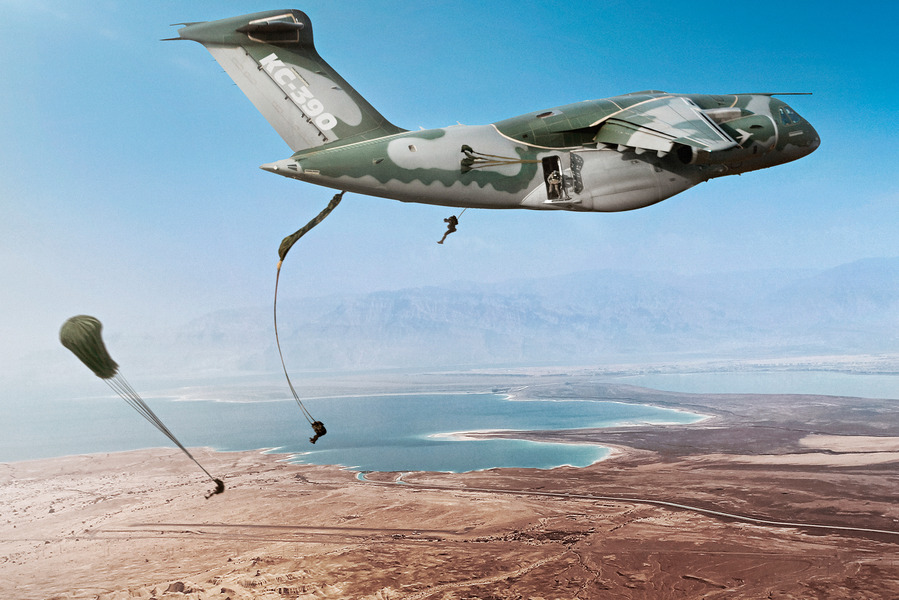
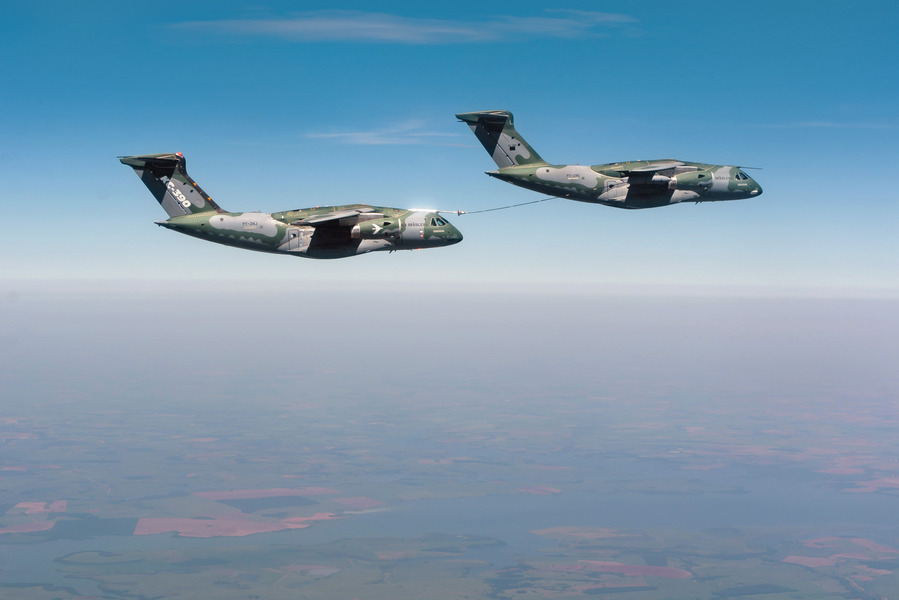
Embraer says the C-390 can carry more payload (26 tonnes) compared to other medium-sized military transport aircraft and flies faster (470 knots) and further, being capable of performing a wide range of missions such as transporting and dropping cargo and troops, medical evacuation, search and rescue, firefighting and humanitarian missions, operating on temporary or unpaved runways. The aircraft – configured with air-to-air refuelling equipment, with the designation KC-390 – can operate both as a tanker and as a receiver.
The C-390 also has a firefighting and search and rescue capability and can carry up to 11,000 litres of water, foam or fire retarding fluid.

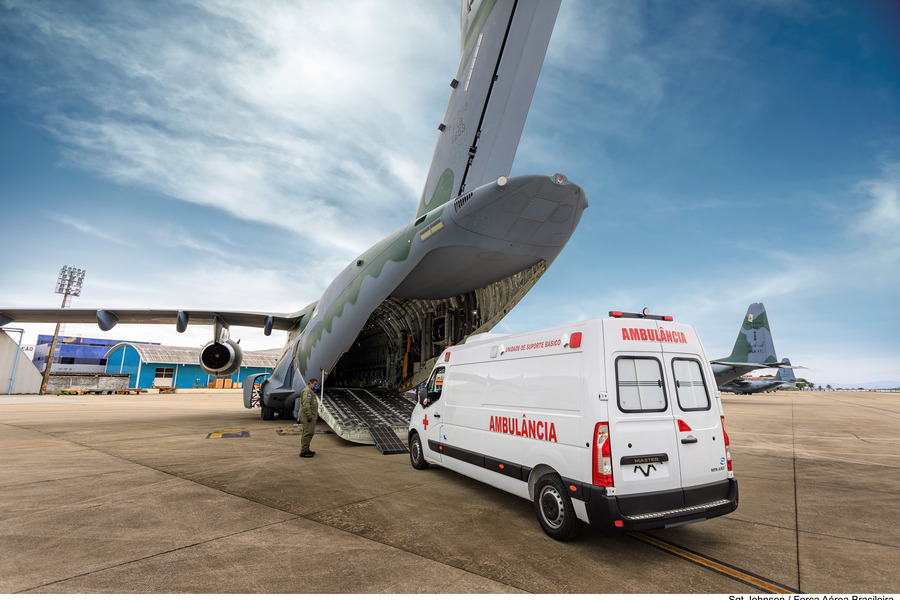
The aircraft proved its versatility at the beginning of the Covid-19 pandemic in Brazil by assisting the Department of Health in transporting ambulances as well as medical equipment through different parts of the country.
According to Embraer it has modern structural design and its airframe enables it to take off and land in harsh environments, contributing to disaster management and peacekeeping operations. The C-390 Millennium has successfully operated in extreme climatic conditions ranging from hot and high natural surface operations in central South America to research station missions in Antarctica.
Since entering operation with the Brazilian Air Force in 2019 the current fleet of aircraft in operation has accumulated more than 14,000 flight hours, with a mission capable rate of 93% and a mission completion rate above 99%.
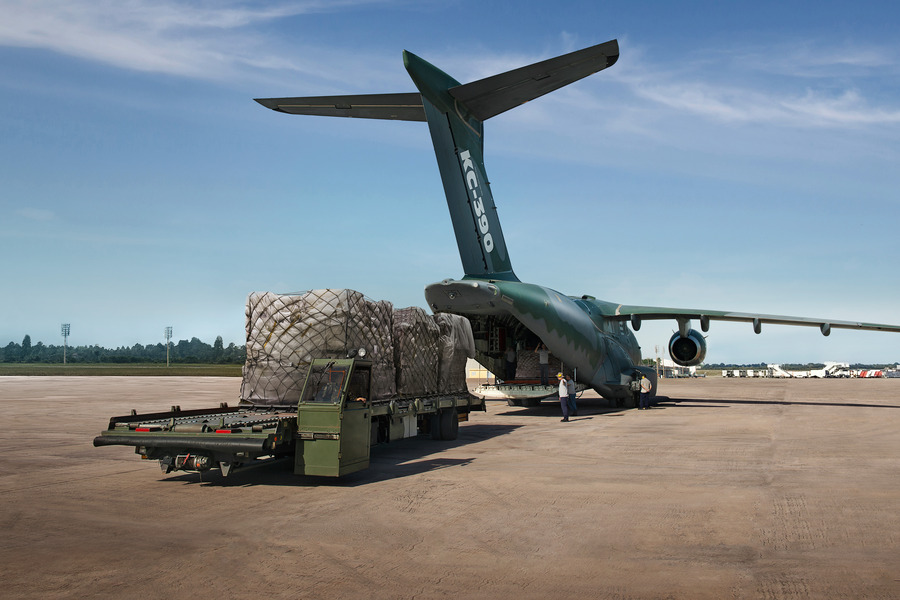
As more air forces evaluate their cargo and multi-role needs, the Embraer C-390 is positioning itself as an ideal successor to the C-130.
PERFORMANCE
Maximum payload (concentrated): 26 metric tonnes/57,320lb
Maximum payload (distributed): 23 metric tonnes/50,706lb
Fuel capacity (wing tanks, usable): 23.9 metric tonnes/52,690lb
Maximum cruise speed: 470 KTAS/Mach 0.80
Altitude ceiling: 36,000ft
Cabin altitude (at max ceiling): 8,000ft
Range with 26 metric tonnes (57,320lb): 1,080nm
Range with 23 metric tonnes (50,700lb): 1,470nm
Ferry range: 3,370nm
Ferry range with internal tanks: 4,570nm
Take-off dist (CFL, SL, ISA, 500nm, payload 23 metric tonnes): 1,524m/5,000ft
Take-off dist (CFL, SL, ISA, 500nm, payload 16 metric tonnes): 1,165m/3,820ft
Vref with 25 klb of useful load: 116 KCAS
Normal landing dist (SL, ISA, 26 metric tonnes): 1,000m/3,280ft
DIMENSIONS
Length: 35.20m/115ft 5in
Height: 11.84m/38ft 10in
Wing span: 35.05m/115ft
CARGO HOLD
Length (floor + ramp): 18.50m/60ft 8in
Height (minimum): 2.95m/9ft 8in
Width: 3.45m/11ft 4in
Volume: 169m³/35,970ft³
MAIN SYSTEMS
IAE V2500-E5 engines with 31,330lb of take-off thrust
Rockwell Collins Pro Line Fusion Avionics System
Gabbiano Tactical Radar T-20 from SELEX Galileo