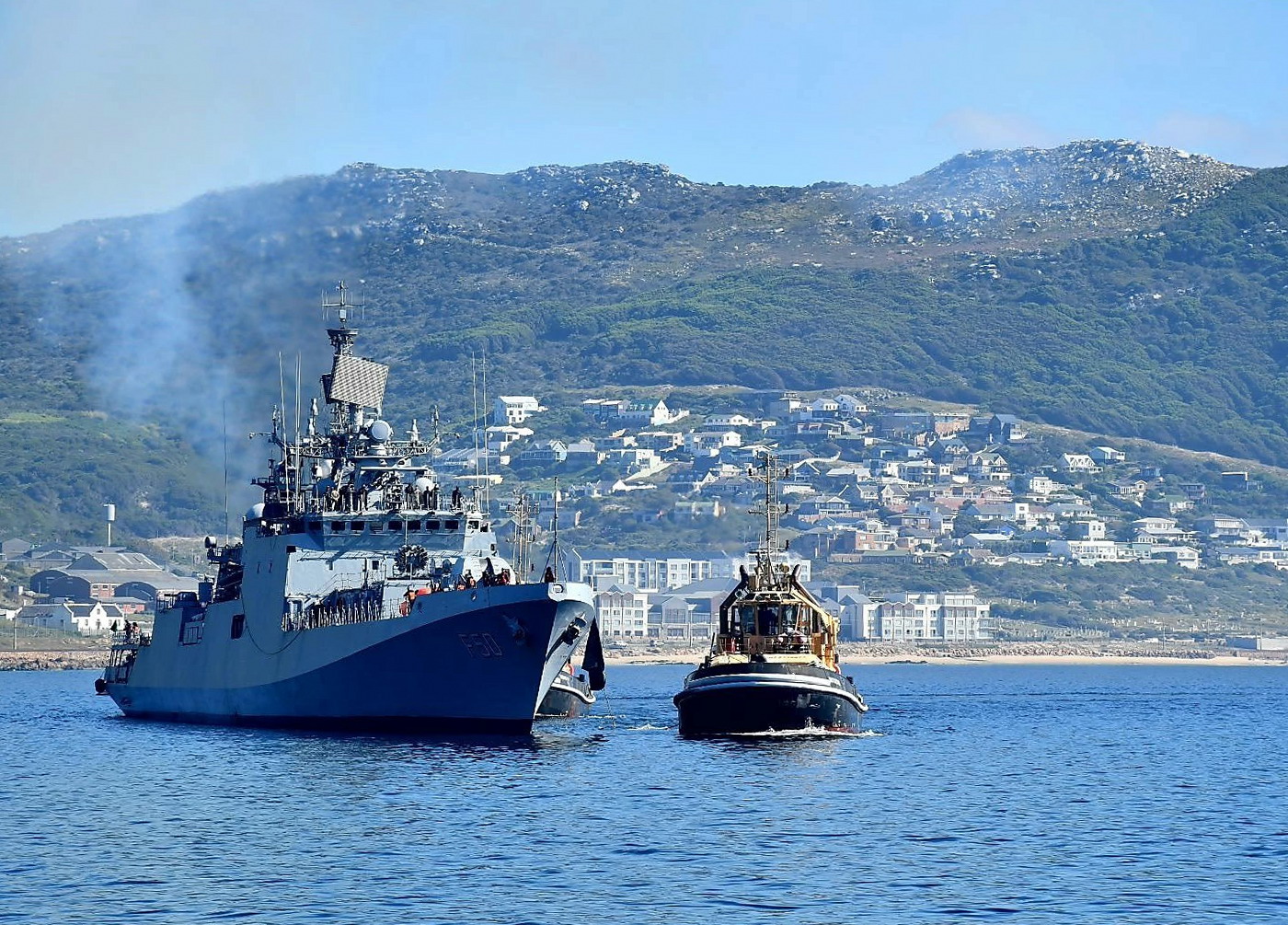
The Indian Navy’s stealth frigate INS Trikand arrived in Mombasa, Kenya, on 7 April 2026 as part of its ongoing operational deployment in the South West Indian Ocean Region. The port call underscores India’s continued commitment to strengthening maritime partnerships and enhancing security cooperation with key regional partners along critical sea lines of communication.
The visit coincided with the presence of Vice Admiral Krishna Swaminathan, Flag Officer Commanding-in-Chief of the Western Naval Command (FOC-in-C WNC), adding strategic significance to the engagement. His presence highlighted the importance New Delhi places on defence diplomacy and naval cooperation in the Western Indian Ocean, a region of growing geopolitical and economic importance.
INS Trikand, a Talwar-class stealth frigate, is well-suited for multi-role operations including anti-surface, anti-air and anti-submarine warfare. Equipped with advanced sensors and weapon systems, the vessel plays a key role in the Indian Navy’s mission-based deployments aimed at ensuring maritime security, deterring piracy and safeguarding international shipping routes.
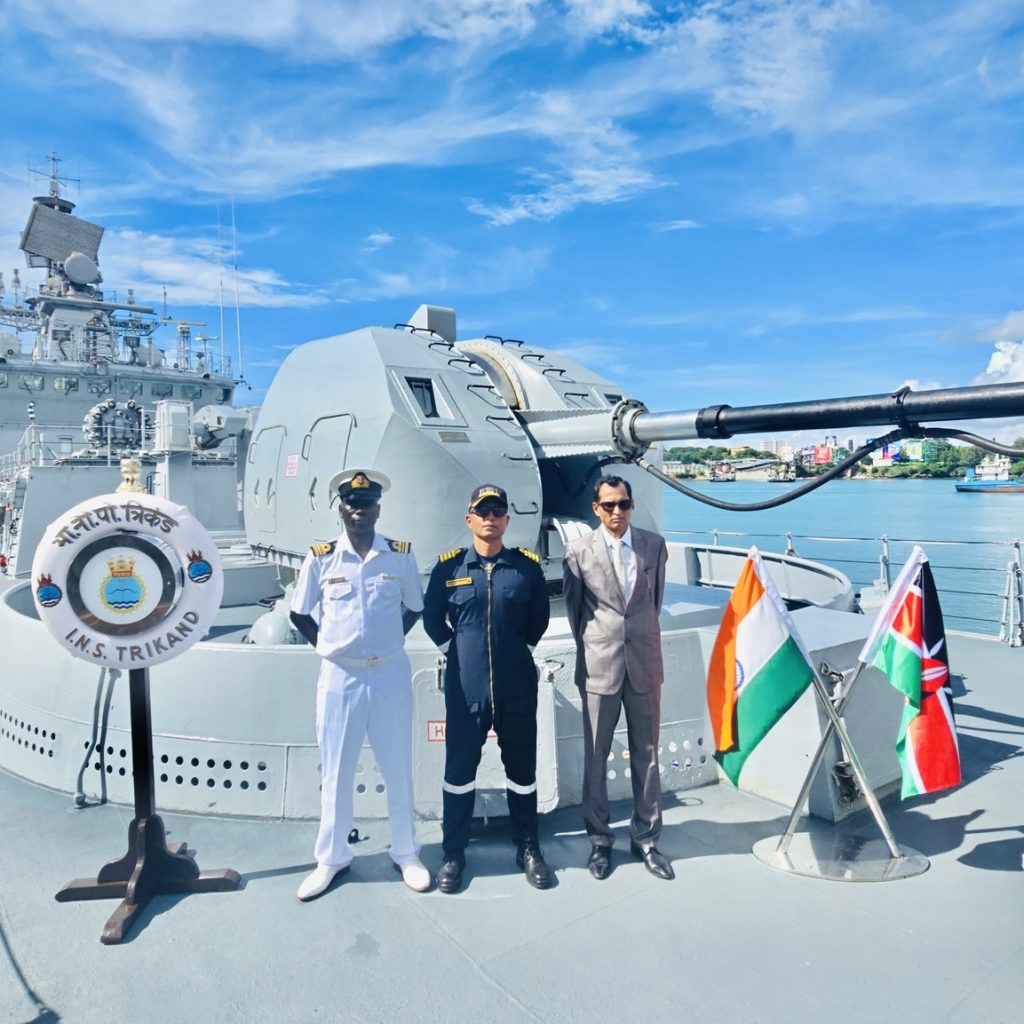
During its stay in Mombasa, the ship’s crew engaged in a series of professional interactions with the Kenya Defence Forces (KDF) and senior Kenyan officials. These engagements focused on enhancing interoperability, sharing operational experiences and strengthening mutual understanding between the two maritime forces. Such exchanges are essential in building cohesive responses to shared maritime challenges, including piracy, trafficking and illegal fishing.
The port call also provided an opportunity for cultural exchange and goodwill activities, further deepening the longstanding relationship between India and Kenya. Naval diplomacy continues to play a vital role in fostering trust and cooperation between nations, particularly in regions where maritime security is a shared responsibility.
A key highlight of the visit will be a Passage Exercise (PASSEX) between the Indian Navy and the Kenya Navy upon INS Trikand’s departure. PASSEX exercises are designed to enhance operational coordination and communication between participating navies, focusing on manoeuvring drills, communication procedures and tactical interoperability. These exercises are particularly valuable in ensuring that naval forces can operate seamlessly together during real-world missions such as search and rescue operations, humanitarian assistance and disaster relief.
The Western Indian Ocean remains a strategically significant maritime corridor, linking major global trade routes and energy supplies. As such, collaboration between regional and extra-regional navies is essential to maintaining stability and security in these waters. India has consistently played a proactive role in the region, conducting regular patrols, joint exercises and capacity-building initiatives with partner nations.
INS Trikand’s deployment forms part of India’s broader strategy to maintain a persistent and credible naval presence in the Indian Ocean Region. By engaging with partner nations such as Kenya, the Indian Navy not only strengthens bilateral ties but also contributes to a collective security framework that benefits the wider region.
For Kenya, the engagement represents an opportunity to further develop its naval capabilities and strengthen its role in regional maritime security. The Kenya Navy, tasked with safeguarding the country’s extensive coastline and maritime interests, benefits from such collaborations through exposure to advanced operational practices and technologies.
The visit of INS Trikand to Mombasa highlights the growing importance of naval diplomacy in addressing contemporary security challenges. As maritime threats evolve, so too must the level of cooperation between nations that rely on secure and stable sea lanes.
Ultimately, this port call and the subsequent PASSEX exercise serve as a testament to the enduring partnership between India and Kenya. Through continued collaboration, both nations reaffirm their commitment to ensuring peace, stability and security in the South West Indian Ocean Region.