With nearly a million square kilometres of ocean to patrol and defence budgets stuck in the doldrums, the SA Navy will have to think out of the box to fulfil its role, writes Paul Ash
There is a strange fish that lives in the cold, dark deep of the Southern Ocean. With its flattened head, large eyes, protruding lower jaw and serrated teeth, it looks like a throwback to the time when dinosaurs strode the Earth – and probably is.
The Patagonian toothfish spends much of its 50-year average lifespan in the cold depths at 1,000m. Adult fish usually grow to 7-10kg in size but some specimens have tipped the scales at more than 100kg. It is also, in some parts of the world, considered a delicacy and rich people, fishing companies and greedy sailors have expended vast amounts of money to bring the Patagonian toothfish from the Southern Ocean to plates in restaurants in Europe, Asia and North America, driving the creature to the edge of extinction.
At the centre of the Patagonian toothfish story is a fleet of six rogue ships called the “Bandit 6” and, in particular, a Norwegian-built, Spanish-owned, Liberian-registered stern trawler named Thunder. If any story is a reminder of why South Africa needs a well-funded, capable peacetime navy, the pursuit of the Thunder is it.
In December 2014 after a monthslong search, the MY Bob Barker, a former whaler operated by the anti-whaling group Sea Shepherd, tracked down the Thunder deep in the Southern Ocean. The Bob Barker’s crew planned to tail the trawler to port where authorities would be waiting to inspect its freezers which were widely suspected of being stuffed with Patagonian toothfish. Instead, the two vessels engaged in the longest nautical cat-and-mouse chase in maritime history. The voyage spanned two oceans and thousands of nautical miles until the Thunder’s Spanish skipper, frustrated at being unable to shake his dogged pursuer, scuttled his vessel off the islands of São Tomé and Principe.
By then, Thunder had sailed 16,500km with part of its journey taking it through SA’s exclusive economic zone (EEZ) which extends 320km from the SA coast. The incident, in which the SA Navy was conspicuous by its absence, revealed one of SA’s weak spots: the lack of vessels to patrol its EEZs, including the waters around Prince Edward and Marion islands, 2,000km southeast of Cape Town.
The uninhabited islands are administered by South Africa and are declared marine protected areas. Although the SA Navy is supposed to patrol them for illegal fishing, the ongoing shortage of vessels means the patrols have taken a back seat in recent years, says defence analyst Helmoed Heitman. The lack of patrols has emboldened rogue trawlers who operate illegally here as well as around the French-controlled Kergeulen island group, 2,640km to the east.
“The French complain that we don’t patrol our waters and poaching vessels that fish illegally around Kergeulen hide in them,” says Heitman. The absence of any naval authority in that part of the ocean has also allowed SA-based operators to plunder Patagonian toothfish stocks, he adds. “It has been fished to hell by SA companies.”
Water, water everywhere
That the SAN finds itself unable to adequately patrol the country’s territorial waters and economic exclusion zones is the result of years of defence budget cuts which have hit the service hard. SA has 2,800km of coastline. Its territorial waters extend 12 miles (19km) offshore while its EEZ extends 200 miles (320km) offshore. That amounts to 896,000km² of waters for the tiny fleet to cover. That figure excludes the EEZ around the Prince Edward islands as well as the Mozambique Channel where the SA Navy has been part of Operation Copper, a regional anti-piracy effort, for more than a decade. Even those critical operations have been severely hampered by budget cuts which have resulted in not one of the four frigates being available for deployment to the Mozambique Channel.
In May 2023, SANDF chief of staff Lt Gen FM Ramantswana told Parliament’s Joint Standing Committee on Defence (JSCD) that none of the frigates or submarines acquired in the controversial 1999 arms deal was operational due to various defects. The budget cuts were acutely felt in submarine operations as scheduled refits to the three Type 209 submarines were delayed due to a lack of funds.
According to a report from Armscor, SAS Manthatisi’s first refit, due be completed by 2014, was only partially finished by the time the submarine was pressed back into service. The vessel’s planned midlife upgrade (MLU), due in 2022, had also not been done, the committee heard. SAS Charlotte Maxeke, meanwhile, was in the middle of an unfinished refit that had been due for completion in 2015, while SAS Queen Modjadji was “undergoing preservation and refit planning activities”. The latter’s refit was originally supposed to have been completed in 2016. The refits had not been carried out as scheduled due to a lack of parts and spares needed for preventive maintenance, SA Navy deputy chief Rear-Admiral BK Mhlana told the committee. Poor maintenance meant the vessels would also not be able to reach their service lifespans, he added.
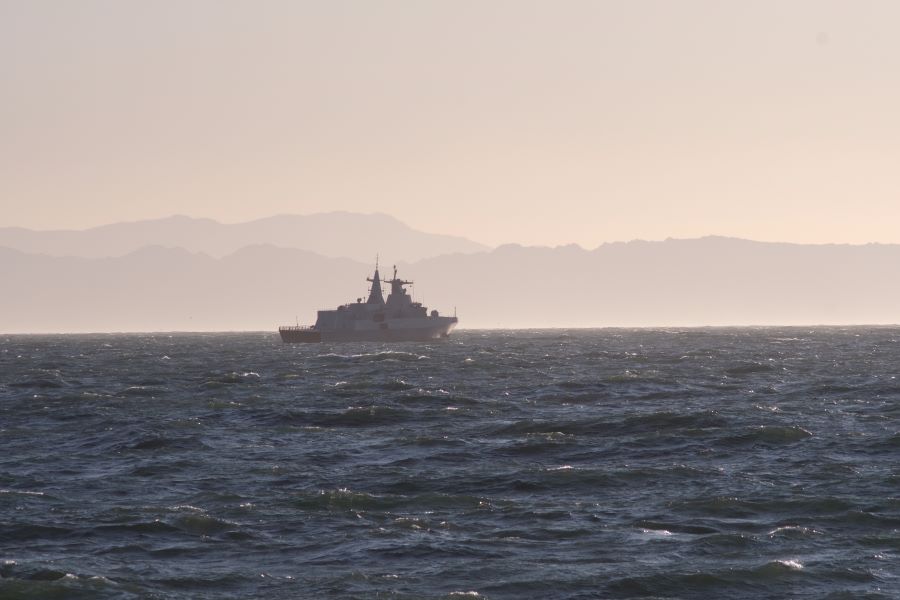
There was a glimmer of hope for the service in 2023, however, after National Treasury allocated R1.4bn to the navy. The funds were ring-fenced for refitting SAS Charlotte Maxeke and SAS Queen Modjaji. By late 2023, SAS Manthatisi was back in service as was one of the frigates which was regularly seen undergoing trials in False Bay. The treasury allocation fell far short of the R8.5bn needed to upgrade all the frigates and submarines, with an estimated R1bn each being needed to upgrade the Valour-class frigates.
That, in turn, means the navy is hamstrung when it comes to fulfilling its peacetime mandate to patrol and secure SA’s water from smugglers and illegal fishing, and help its SADC neighbours combat piracy.
Trading up
Right now, looking after the Mozambique Channel should be the SA Navy’s main priority, says Heitman. “We should be looking after the Mozambique Channel,” he says. “It is the shortest sea route from the Middle East, Asia and the Mediterranean to SA, and a lot of our economy depends on that.” Stability in SADC and East Africa is also in SA’s long-term economic interest, he adds.
“It is good for us to be engaged in the region,” he says. “It is our captive market.”
SA Navy operations in Mozambican waters should also cover Cabo Delgado province where Mozambican troops, assisted by Rwandan and SA forces, have been grappling with a three-year jihadist insurgency. “They should put the Marine Reaction Force [the navy’s reincarnation of its previous marine infantry] and fast boats in Cabo Delgado, operating from a secure base,” he says, noting that the MRF had previously enjoyed fruitful deployments to Congo and Burundi where it had patrolled Lake Tanganyika in small, fast boats.
The navy’s next priority is to secure SA’s maritime borders with Namibia and Mozambique, says Heitman, adding that the new inshore patrol vessels (IPVs) being supplied under Project Biro would work well in this role. “One could go to Richards Bay to cover the Mozambican maritime border, one to Port Nolloth to cover that border with the third in maintenance,” he says. The new ships would not solve SA’s critical shortage of naval vessels, however.
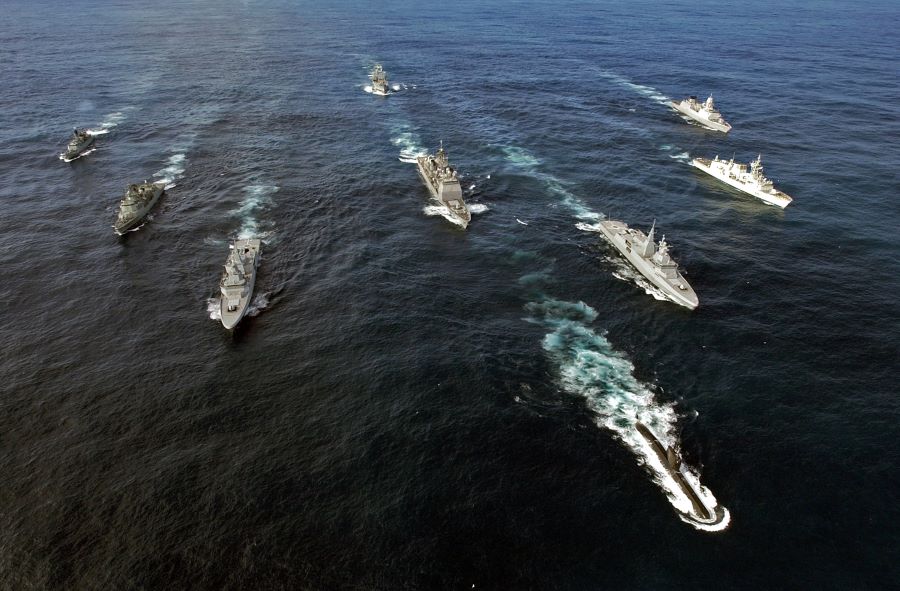
Speaking at a ceremony to mark the handover of the second IPV in November, navy chief Vice Admiral Monde Lobese said the navy needed “at least another 12 ships” to protect SA’s territorial waters and coastline. Heitman puts the vessel shortage in more robust terms. “Now that we’re working regionally, we should have six frigates and six offshore patrol vessels,” he says.
Cheap as ships
With defence budget cuts unlikely to end any time soon, the navy would have to think out of the box to solve its shortage of patrol vessels. One solution would be to acquire large stern trawlers which are widely available on the used market and convert them into offshore patrol vessels. “They’re cheap,” says Heitman, noting that a hangar, helicopter flight deck and armament could be added to such vessels at a fraction of the cost of a new, purpose-built naval vessel.
In no small irony for the SA Navy, the Thunder saga only proves just how rugged and seaworthy stern trawlers can be. Equipped with boarding boats as well as a helicopter and drones, the vessels would be ideally suited to patrols in such inhospitable places such as the Prince Edward Island EEZ.
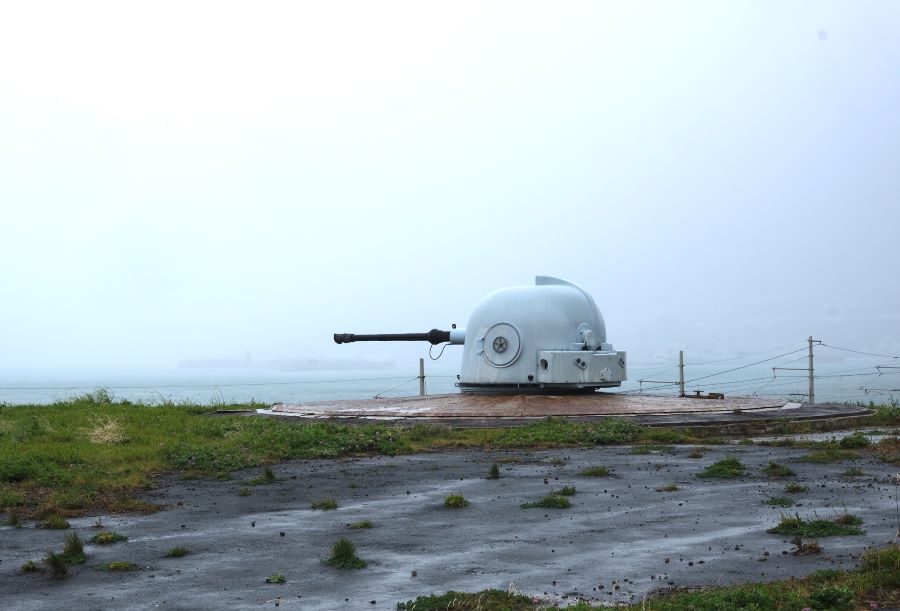
That in turn would free up the frigates – once they are repaired – to carry out the vital task of showing the flag, along with a 76mm gun and missiles, in places where SA’s security is being threatened, such as the Mozambique Channel.
- The saying “to spoil the ship for a ha’p’orth of tar” means to have something important fail for want of a small amount of money or effort. It comes from the age of sail when tar was used to prevent rot in the ship’s rigging and wooden hulls.
7 Facts About The SA Navy
Founded: 1 April 1922 as the South African Naval Service (SANS).
Notable actions: 80 converted trawlers and whaling ships served as minesweepers and convoy escorts during World War II. One, HMSAS Southern Floe, sank after hitting a mine in the Mediterranean Sea. Only one of the 28 crew survived.
The SAN also deployed submarines, strike craft and frigates along the Angolan and Mozambican coasts during the Bush War.
Total size of fleet: 17 large vessels, 26 harbour patrol craft.
Newest vessels: 2 Warrior-class multi-mission inshore patrol vessels (MMIPV), first ship delivered in 2022.
Oldest vessel in service: SA Protea, hydrographic survey ship. Launched in 1971, commissioned 23 May 1972.
Staff complement: 6,800 active personnel.
Budget allocation 2023/24: R4.51bn (2022/23: R4.47bn)