By James Kerr
South African Defence Industry Involvement with the Gulf Cooperation Council (GCC) Nations
The Gulf Cooperation Council (GCC) is a political, security and economic alliance of six countries: Bahrain, Kuwait, Oman, Qatar, Saudi Arabia, and the United Arab Emirates on the Arabian Peninsula. All six states are rooted in Arabic and Muslim culture. The GCC charter Article 4 states that the alliance was formed to strengthen relations among its member countries and to promote cooperation among the countries’ citizens. The cooperation with the GCC states extends to military cooperation where there is a defence planning council coordinating military cooperation between member countries and the Peninsula Shield Force.
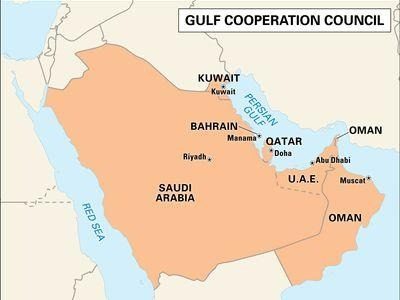
The area has some of the fastest-growing economies in the world, mostly due to a boom in oil and natural gas. The GCC members collectively supply ±25% of total global crude oil production.
Over the past 20 years, the GCC nations have been diversifying the economic base. Aviation, aerospace and defence are areas identified for development of manufacturing capabilities. The diversification of the economic base has aligned with a build up of military capabilities in the region.
The South African Defence Industry (SADI) reputation is strong within the GCC region. The GCC were among the early adopters of SADI innovative integrated systems capability. As examples are the Oman, UAE and Iraq acquisition of the battle-proven G6 artillery solutions. The Denel Seeker UAV system was also acquired by UAE and Saudi Arabia.
| Denel G6 Rhino | Denel Seeker UAV |
The SADI noticed the change in posture in the GCC nations early. Defence projects typically take around 10 years from initial lead to translating into solution deliverables. The need for transfer of technology was an area that SADI was willing to assist in creating capability in the foreign countries. South Africa is one of the few countries that has established a full design and development capability for military grade products and is willing to share that knowledge.
The shrinking of the South Africa defence budget and the opening of trade relations post 1995 aligned to give the SADI a buffer to explore international markets. The GCC change in defence spending came as the SADI European market was starting to contract.
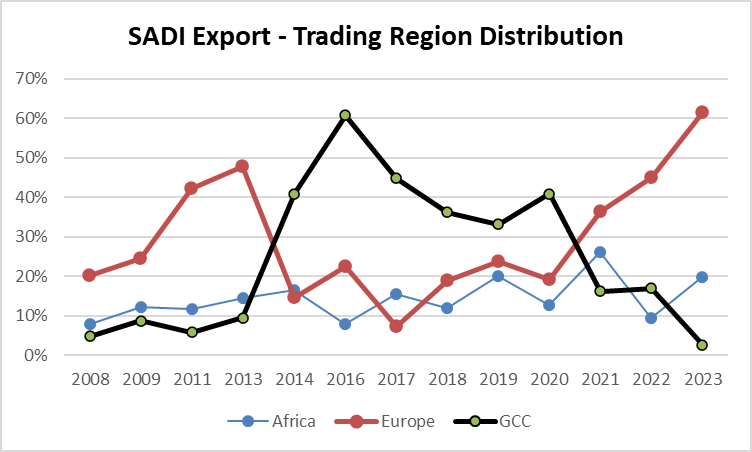
The benefit for the SADI was that rapid innovation capability satisfied needs in an urgently changing battlefield. Many SADI battlefield tested solutions were suited to the war on terror battlefields. These systems aligned with the GCC needs at the time of defence capability recapitalisation.
The SADI entered the GCC region with Armoured Combat Vehicle solutions based on proven designs. Companies like OMC/Denel Vehicle Systems, ICP REVA, LMT, DCD Protected Mobility, ADG Mobility and the Paramount Group successfully secured supply contracts in the region. The unique Husky landmine detection vehicle of DCD Protected Mobility is one of the GCC wide success stories of the Armoured Vehicle supply solutions. The example of technology transfer and capability development is highlighted by ADG Mobility assistance in the design of the Wahash 8×8 vehicle that is now being manufactured in the UAE by Calidus.
| DCD Husky | ADG Mobility designed Wahash 8×8 |
Larger equipment pieces like artillery, vehicles and UAV’s attract attention as they are easier to recognise when in operation. The SADI has also had a major impact in the supply mission sub-systems. The SADI has a well developed electronic based capability that has systems covering the sensor, communication and electronic warfare (EW) elements of the modern battlefield.
The SADI are leaders in frequency hopping, encryption and standardised communication link technology. This is packaged in military radios from companies like Reutech Communications. The sensor supply can be linked to optronics systems like the market leading Hensoldt Optronics Argos solution for defence and security applications.
The EW sector is one in which the SADI has various solutions developed out of necessity and battle proven. This includes systems like Identification Friend or Foe (IFF) system from companies like Tellumat, or communication intelligence and spectrum management systems from GEW, both part of the Hensoldt SA group. Saab Grintek Defence has been supplying products into the GCC across the electronic support measures (ESM) domain, but the electronic self-protection suite products offer competitive value in the GCC area.
The SADI supplies goods into the GCC across the spectrum of defence supply. A major supply element is light and heavy ammunition, bombs, mortars and missiles. The battlefield replenishment needs are supplied from companies like Rheinmetall Denel Munitions. The light weapons in the battlefield are supplied by companies like Milkor and Rippel Effect with Multiple Grenade Launcher solutions.
The SADI supply to the GCC nations has been strong. The successful industrialisation of the aerospace and defence sectors by specifically UAE and Saudi Arabia could start placing pressure on the SADI manufactured goods supply lines.
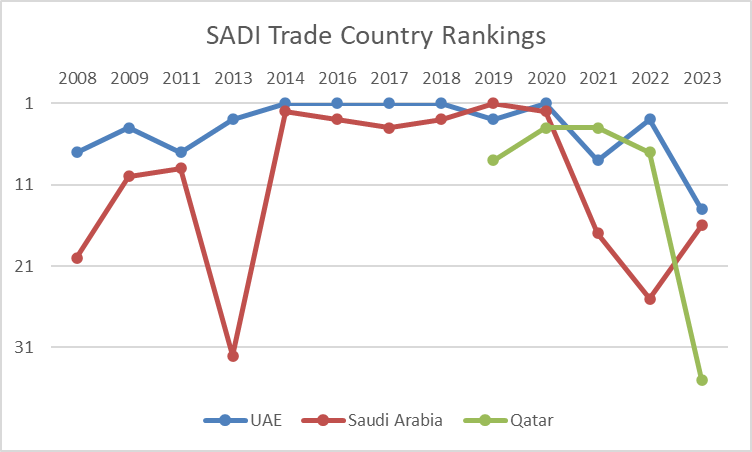
The trade figures of the last three years are starting to highlight potential pressure for the SADI. The UAE, a perennial No1 buyer over the last 10 years, sales are starting to drop off. The design and development capability remains in demand and can carry benefits back into the South African market.
The GCC Nations remain important trade partners for the SADI.