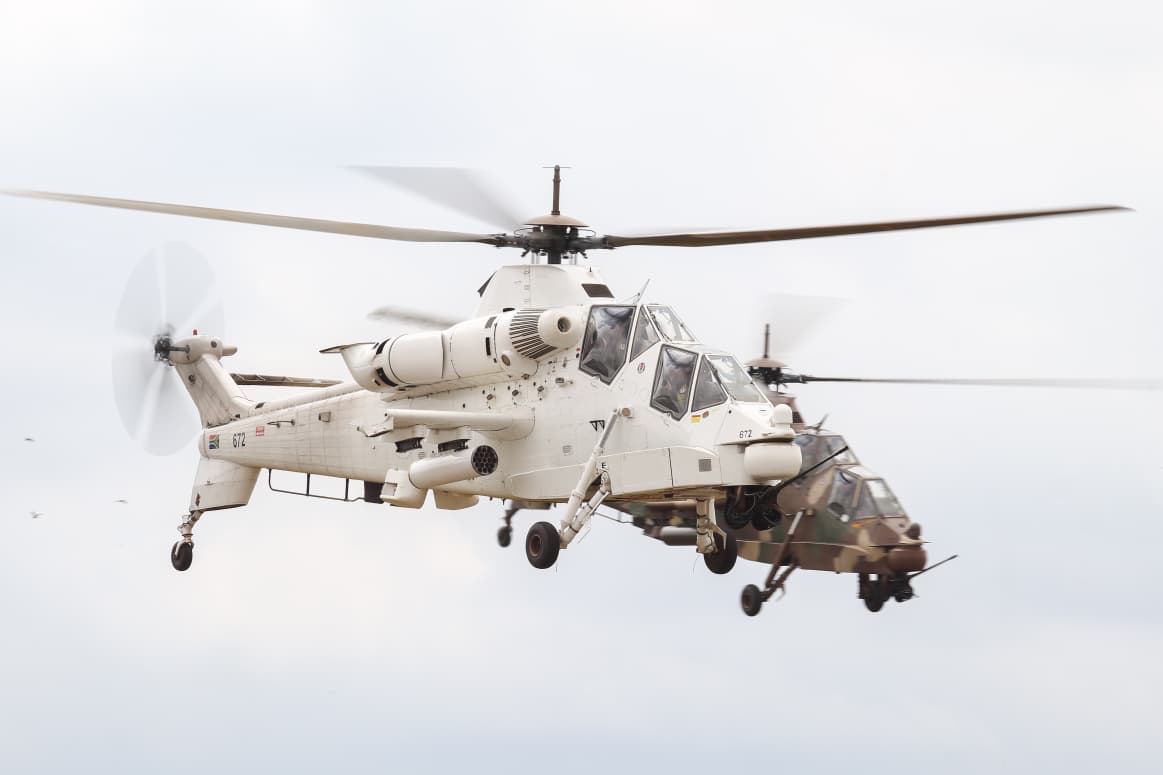
South Africa used to boast the most advanced defence industry on the African continent, supplying weapons and equipment to both the South African National Defence Force (SANDF) and international customers. While the overall capacity has declined for numerous reasons, there are still many innovative suppliers who are making their mark in the export market.
A legacy of development
The South African defence industry has its origins in the country’s historical need for self-sufficiency during apartheid. Sanctions imposed during this period spurred the development of indigenous defence capabilities, leading to the establishment of a strong domestic industry.
Post-apartheid, the industry underwent restructuring due to decreased military spending and a shift towards peacekeeping missions. It was imperative to align with global standards, focusing on research, development and international partnerships.
To survive, many companies diversified into civilian products and aggressively pursued exports to offset the decline in domestic demand. This focus on international sales has been instrumental to the industry’s continued success.
Export focus
According to the South African Aerospace, Maritime and Defence Industries Association (AMD), one of South Africa’s key characteristics is its “independence” as a defence industrial capability that can offer a viable alternative to non-aligned/non-NATO defence clients who value access to a reliable supply of defence equipment and services.
Over the past few years, AMD has put in significant effort to grow the export market for South African defence products and services via the SA Aerospace Maritime Defence Export Council (SAAMDEC).
The recent rise in global defence spending, fuelled by the war in Ukraine, has been a boon for South African defence exports. Sales show a dramatic increase, with exports exceeding expectations in 2023, the main customer base being the Middle East and Africa.
Figures from the National Conventional Arms Control Committee (NCACC) show a jump from R3.3bn in 2021 to a surprising R4.6bn in 2022, with 2023 figures on track to be even higher as the first three quarters of last year totalled R4.9bn.
This, however, is still far less than in the early 2000s.
Yet, the industry faces challenges and the defence business is inherently political. The NCACC plays a crucial role in approving exports and has been criticised for a bureaucratic and slow approval processes as well as a lack of transparency which is hampering marketing and sales efforts.
Regional conflicts and instability led to denials of export permits by the Arms Control authorities (eg the Yemen conflict resulted in certain category permits being denied to Oman, UAE and Saudi Arabia while the current Ukraine/Russia conflict has stalled sales to Poland).
South Africa’s defence exports: A diverse arsenal
South Africa’s defence industry, consisting of private and public sector companies, offers a comprehensive range of products catering to the diverse needs of modern militaries and civil entities alike.
These range from the design, development, manufacture and maintenance of equipment and systems to the provision of mission specific systems and subsystems, along with the required enabling capabilities such as training, modelling and simulation.
Given that the primary client, the SANDF, operates in diverse and exacting climatic and geographical conditions, South African defence offerings are ideal for most defence applications virtually anywhere in the world.
These companies are also able to offer systems design, engineering and integration capabilities in upgrading and customising foreign defence systems for third-party markets.
Some of these key offerings includes military aircraft for various roles, including microlight patrol aircraft, unmanned aerial vehicles (UAVs) and the Paramount Group Mwari turboprop-powered light attack and surveillance aircraft. The industry also boasts a capability to develop and manufacture various anti-surface and anti-air missile systems.
Key aerospace products
Denel SOC Ltd is South Africa’s largest defence contractor, producing a wide range of products, including aircraft and missiles. The state-owned company has recently restructured after years of mismanagement and is still facing cashflow constraints, having already exited the aerostructure manufacturing business.
Denel Dynamics offers a range of air defence, air-to-air and anti-armour missiles, but funding issues resulted in the exodus of experienced engineers and the loss of key capabilities. While having exported a number of air-launched missiles and long-range high-precision guided weapons in the early 2000s, future exports are hindered by company financial and reliability issues.
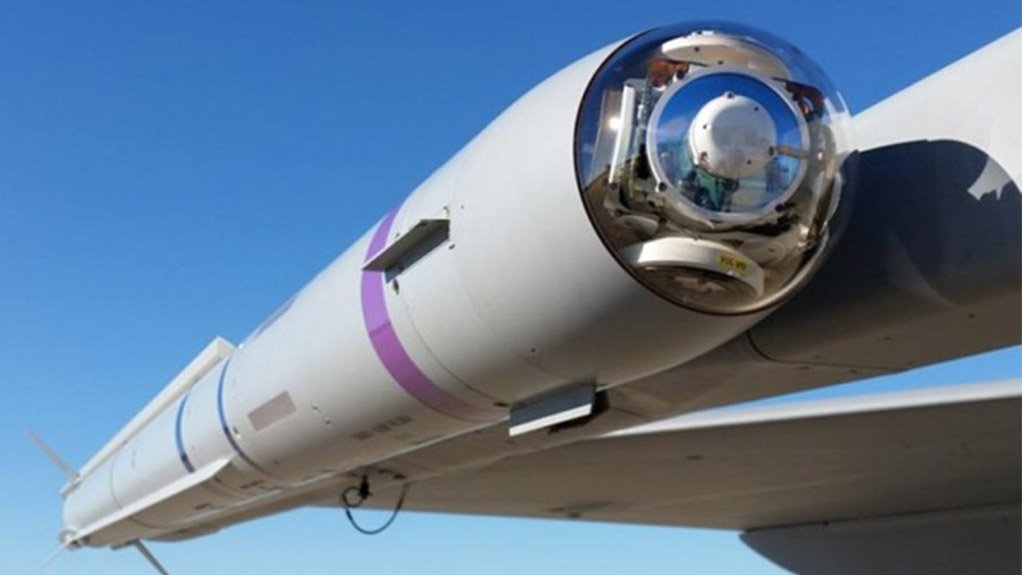
The long-delayed V3E Agile Darter (A-Darter) air-to-air missile (developed jointly with Brazil) passed its qualification tests in April this year, about eight years later than originally scheduled. Initial deliveries to the South African Air Force (SAAF) are scheduled for later this year, but Brazil has cancelled plans for local manufacture.
The Umkhonto family of vertical-launched, surface-to-air missiles has been one of Denel’s signature products for more than 20 years and is constantly being modernised and upgraded to incorporate the latest technology. The missile can be launched from naval vessels or ground-based launchers, having already achieved sales to Finland and Algeria. A sale to Egypt fell through in 2020 due to the failure by Denel to secure a bank guarantee for the project, but Denel is still actively marketing the system.
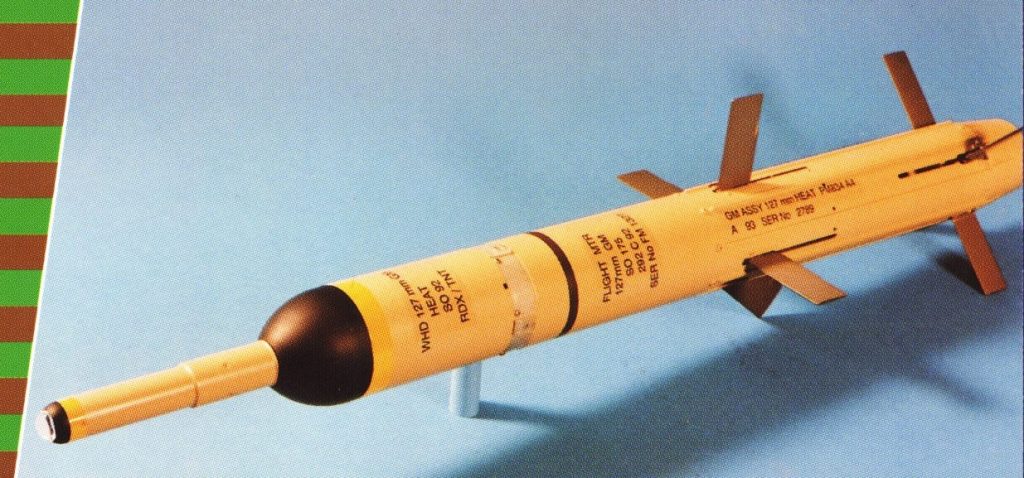
The ZT3 Ingwe multi-role laser beam riding anti-tank guided missile (ATGM) had considerable success in the international market, having been sold to Algeria, Iraq and Malaysia. It can be launched from helicopters and fire-on-the-move land platforms such as fighting vehicles, using jam-resistant, laser beam-riding guidance. Although designed in the 1980s, it is constantly updated and is still marketed internationally.
The newer (but complementary) ZT-6 Mokopa air-to-ground anti-tank guided missile has also been sold to Algeria.
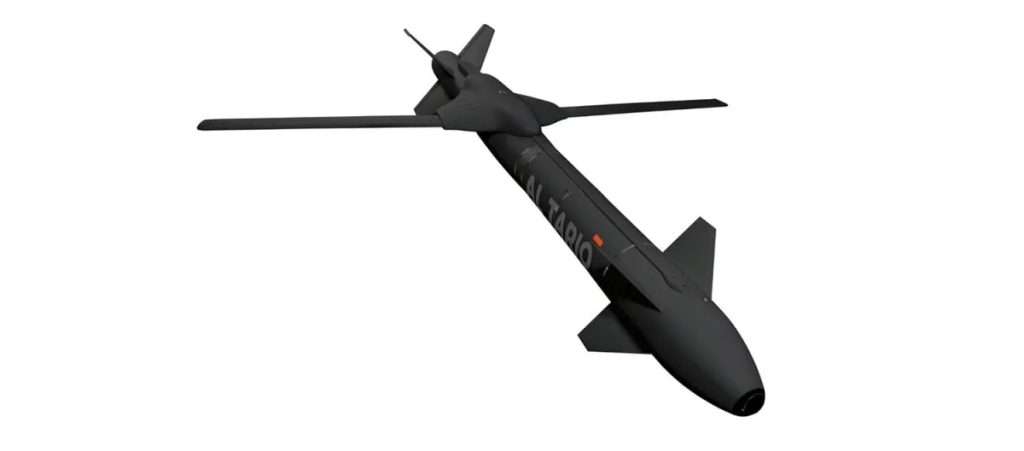
In 2002 Denel Dynamics began development of the Umbani (Lightning) guided bomb kit, which can be fitted to Mk 81 (120kg), Mk 82 (240kg) or Mk 83 (450kg) bombs. Several guidance options are available, including autopilot with GPS and INS guidance or terminal laser or imaging infrared guidance. In the end, the SAAF acquired the Paveway II but the Umbani was exported to the United Arab Emirates (UAE) in 2012 as the Al Tariq and manufactured by a Denel/UAE joint venture called Tawazun Dynamics, now known as Al Tariq, part of the EDGE Missiles & Weapons cluster.
Paramount, now headquartered in the UAE, has orders for nine of the two-crew Mwari light reconnaissance, surveillance and counterinsurgency aircraft from two customers (the DRC and Mozambique). Manufactured at Wonderboom Airport, it is the first new clean-sheet manned military aircraft in South Africa since the Rooivalk.
The Bat Hawk is a conventional three-axis light sport aircraft, not something that one would think of as a combat aircraft. But the Nelspruit-built aircraft have been exported for use in surveillance, anti-poaching and border patrol roles, including to the Botswana Defence Force armed with a light machine gun.
The Seeker drones have since been retired from the SAAF, but are still operated by Denel Dynamics on behalf of the SANDF and other organisations. Denel still offers the Seeker 400 UAV, having already sold a number to the UAE.
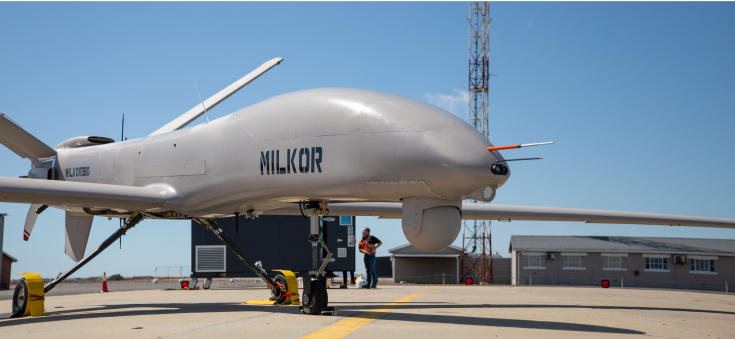
Best known as a manufacturer of multiple grenade launchers, armoured carriers and naval interceptors, Milkor is developing the 18.6m wingspan Milkor 380 Medium Altitude Long Endurance (MALE) UAV. It is the largest UAV to be manufactured on the African continent, having an endurance of up to 35 hours. Entering production this year, an agreement with the Department of Defence will see the first production aircraft used exclusively by South Africa.
Milkor revealed in February that it was in talks with Saudi Arabia about a potential order for its Milkor 380 which could be fully assembled and manufactured at Milkor’s Saudi Arabian subsidiary. The UAE was also reported as another possible customer for the UAV.
Hensoldt South Africa business unit GEW is one of the leading players in the spectrum dominance industry in South Africa, having been active in the COMINT (communications intelligence) field since the 1960s. The company develops and manufactures strategic, semi-mobile and tactical systems, as well as airborne and ship-mounted systems, some of which include sophisticated electronic attack capability in addition to search, direction-finding and basic jamming capability.
An associated company of Denel from which it is in the process of divesting itself, Hensoldt Optronics designs, develops and manufactures airborne electro-optical sensors and systems (such as the Argos and Goshawk) for integration into aircraft, unmanned air vehicles and helicopters.
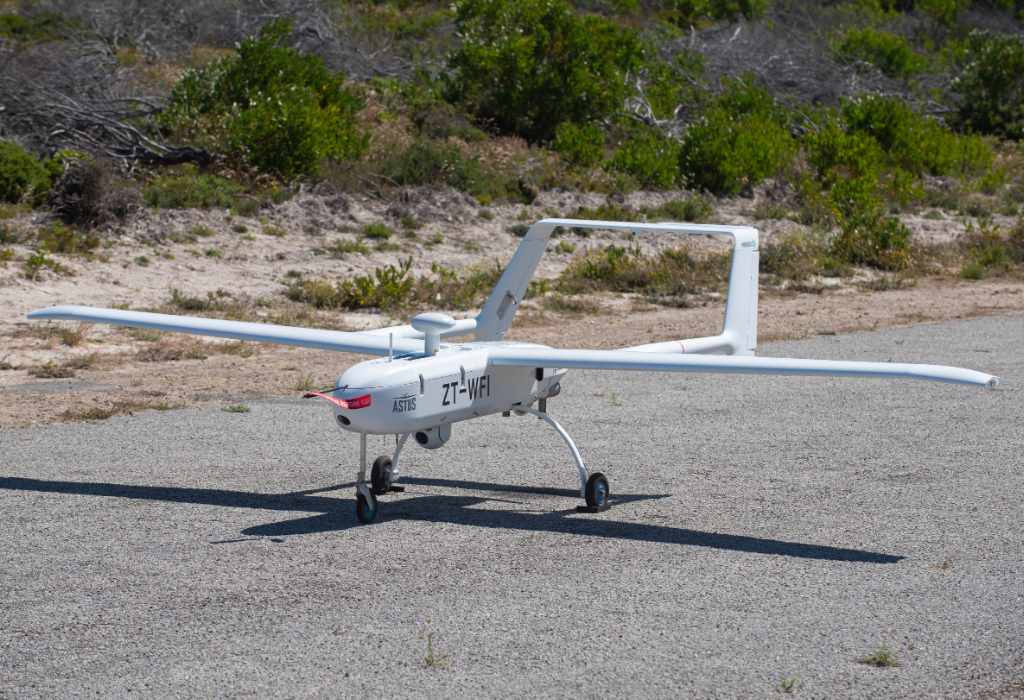
The 5.2m wingspan Astus UAV, initially developed by Tellumat, has been taken over by Hensoldt and can be used for a variety of airborne surveillance and monitoring applications.
SAAB Grintek Defence manufactures and develops integrated electronic warfare self-protection systems, laser warning and training systems, as well as avionics and security and support solutions to a large base of international clients.
TMI Simulation Solutions has delivered vehicle training simulators to the SA Army and internationally. It was a subcontractor on the Gripen flight simulators and computer-based training solutions for Gripen clients.
Looking ahead
The South African defence industry appears poised for continued growth. The global rise in defence spending presents fertile ground for expanding exports. However, ensuring responsible and transparent practices requires navigating the complexities of the export control regime. Streamlining approvals and fostering openness will be crucial in solidifying South Africa’s position as a trusted supplier in the international defence market.