by Helmoed Römer Heitman
The potential for any major increase in defence funding is extremely limited for the time being.
That reality demands two things of the Defence Force:
- To learn to say “no” when tossed yet another unfunded mission.
- To restructure to fit likely funding without completely losing key capabilities that would take many years to rebuild.
This article focuses on the combat services; the rest of the Defence Force and the Secretariat will need to be scaled down at least commensurately.
Given a deteriorating strategic environment, a key contrarian action must be to increase funding for Defence Intelligence and the Special Forces. The one is critical to early warning; the other can sometimes head off a problem before it becomes a crisis.
Fitting the Defence Force into the likely budget will require accepting no participation in peace support missions pending a future substantial increase in funding, and that border patrols would be cut back if forces are required for an intervention or to contain spill over from conflict in a neighbouring country. A Defence Force that fits current funding levels will lack the personnel and the equipment for any regional security role.
But we will need the ability to respond to a crisis in one of the fragile countries on our borders, if only to contain spill over into South Africa, and to protect vital external interests.
Army
The Army is the costliest of the combat services, primarily because it is the largest in terms of personnel strength, which is driven by mission requirements. It is also the main user of reserve personnel for the same reason. Cutting back will, therefore, require reducing the mission set to fit the strength that can be afforded.
At the minimum, the Army will need to retain forces to counter any military or paramilitary threat along our borders, and to deploy force elements to protect vital external interests. Those might include Cahora Bassa, the rail link to Maputo port and the Highlands Water Scheme.
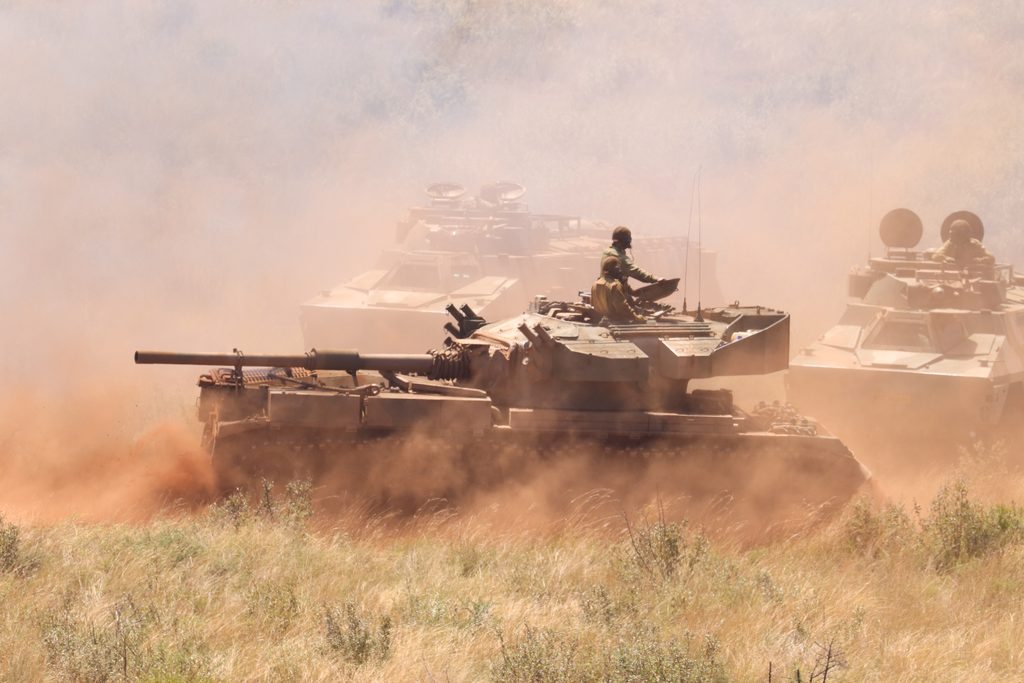
Given the reality that irregular forces are increasingly well led, trained, equipped and armed, that will require a mechanized strike force for intervention tasks and to counter guerrillas with ‘technicals’, an infantry force for difficult terrain and protection tasks, and a quick-reaction air mobile force. Mechanized and air mobile capability would take many years to rebuild if lost. One option might comprise:
- A strong mechanized brigade group (armoured car regiment, three mechanized and one motorized infantry battalions, artillery, air-defence artillery, field engineers).
- A motorized brigade of four motorized battalions only, supported by the mechanized brigade group as needed. It would provide the border patrol elements, supplemented by elements of the mechanized and airborne forces as part of their field training.
- An airborne regiment of an air assault battalion and a parachute battalion.
An alternative would be to establish strong combat groups combining all combat elements and designed to serve as core of a future brigade. Perhaps three mechanized, three motorized and one air/heliborne.
Capabilities not included in those force groupings should be retained as ‘battle labs’ at the corps schools, to allow skills to be kept alive and new doctrines and tactics to be developed to counter evolving and future threats.
Air Force
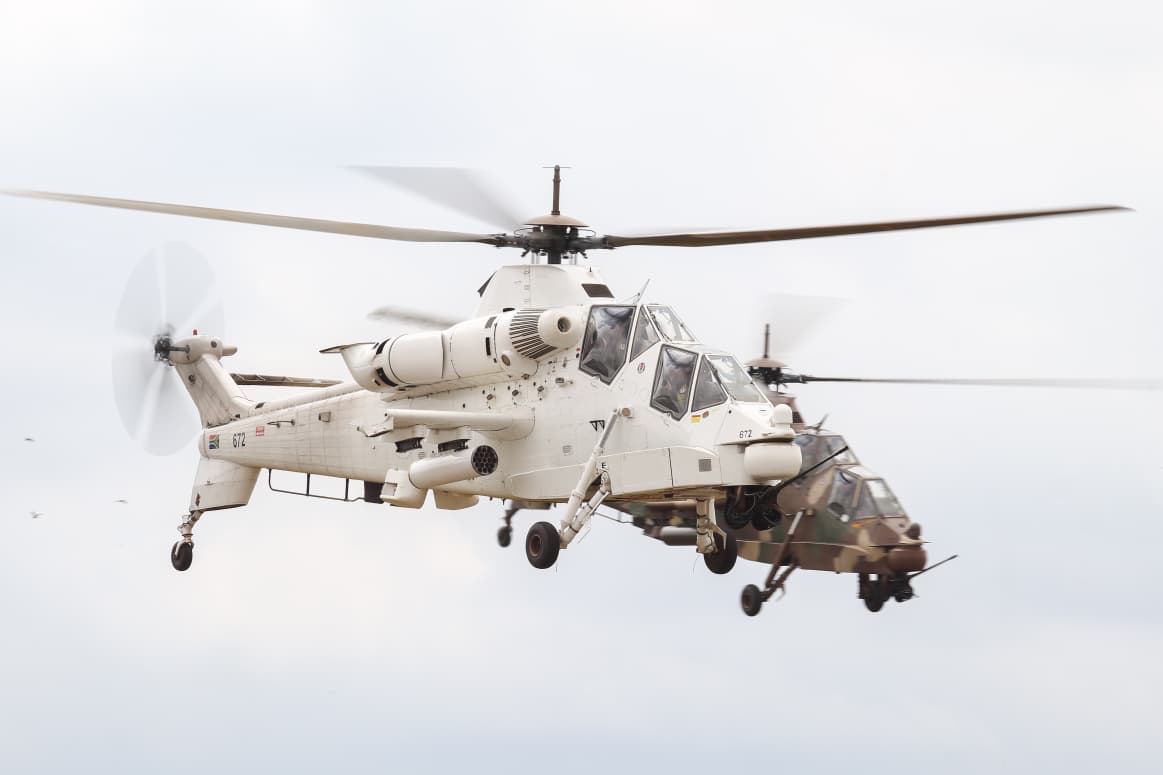
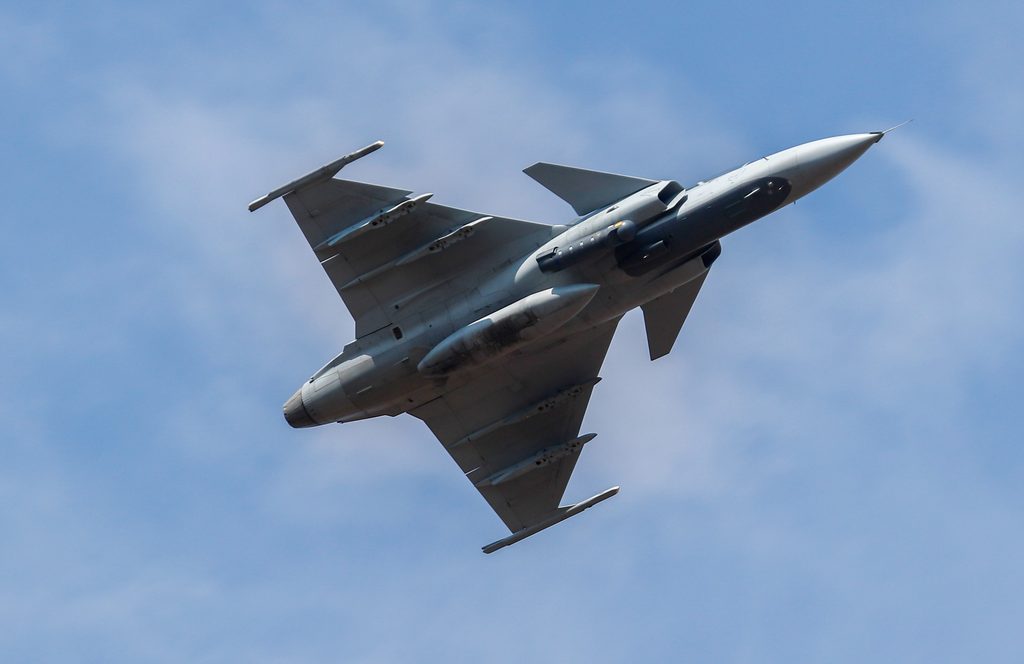
The core and key capabilities of the Air Force are its fighter and helicopter forces. Those must be retained, even if only part of the fleet is kept operational at any one time. The fighter force, in particular, would take many years to rebuild once lost. An affordable fleet might comprise 12 Gripen, 6 Rooivalk, 18 Oryx (with others in storage), plus the 4 Super Lynx, 4 C-130s and some utility aircraft (C-212, Caravan, King Air).
Funding will have to be found for weapons for the Gripen, Rooivalk and Super Lynx, and to acquire 6 maritime King Airs.
The Hawk is needed for fighter training, but a smaller fleet should suffice. The A-109s will have to be discarded, with a simpler type acquired for training, but perhaps the small BK fleet could be retained.
The entire VIP fleet should fall away to be funded separately by the Presidency.
Navy
The Navy should retain its frigates and submarines. The former provide the range/endurance to handle crises in adjacent waters; the latter provide key strategic surveillance capability. Both capabilities would take a decade plus after delivery of new ships to rebuild. Given the funding constraints, that suggests a fleet based on those seven ships, the three MMIPVs (perhaps adding a fourth if funding allows) and the survey ship, which must be equipped to also handle patrol tasks. It is unlikely that there will be funding to replace SAS Drakensberg, which is also another reason to retain the frigates for their distant operations capability.
One option, given a little additional funding, might be to acquire a number of large fishing vessels to be repurposed as offshore patrol vessels for home waters, with basic sensors, light weapons and drones.
Conclusion
The ideas set out here represent a bare minimum of defence capabilities and assume acceptance of quite considerable strategic risk.