It is a warm night in the winter of 1942 and the war is in its third, grinding year. All down the coast of Africa, the lights of every seaside town have been dimmed or blacked-out in an attempt to confuse the German U-Boats lurking offshore. All, that is, except for Lourenço Marques, which is lit up like a Christmas tree.
By Paul Ash
Portugal has chosen to stay out of the war which means its African colonies are also neutral. As a result, the city’s lights gleam on the dark waters of Delagoa Bay and are visible far out to sea.
The lights are a magnet for both prey and hunter. Allied merchant ships, laden with troops and munitions, push north against the Mozambique current. Meanwhile, German U-Boats linger in the deep channels off the low-lying hump of Inhaca Island, 35km east of the port.
One of them is U-178, commanded by Kapitan Hans Ibbeken. U-178 has been on patrol for many months and is a long way from its base in the Gironde River estuary in Vichy France. It has not been a fruitless patrol, however. For here, just after midday on November 4 1942, the Norwegian tanker Hai Hing steams into view just six nautical miles north of Inhaca Light.
U-178 fires a single torpedo, striking the tanker near no.3 hold on the starboard side, causing a massive blast. The Hai Hing sinks in 90 seconds. There is no time to launch the boats and 25 of the 67 crew go down with the ship.
Even Ibbeken seems surprised that the Hai Hing did not suspect the U-Boat’s presence.
“Really,” he wrote on the submarine’s logbook afterwards, “people ought to keep their W/T manned all the time.”
Three hours later, U-178 sinks the British merchantman Trekieve with a single torpedo, killing three of the 50 people on board.
Before the year was done, Ibbeken and fellow U-Boat ace Wolfgang Lüth, commander of U-181, would sink another six ships in the Mozambique Channel until, low on fuel, food and torpedoes after six months at sea, the U-Boats began the long and perilous journey back to France.
Fast forward 70 years to a different war and another German-built submarine is lurking at periscope depth off the Mozambican coast.
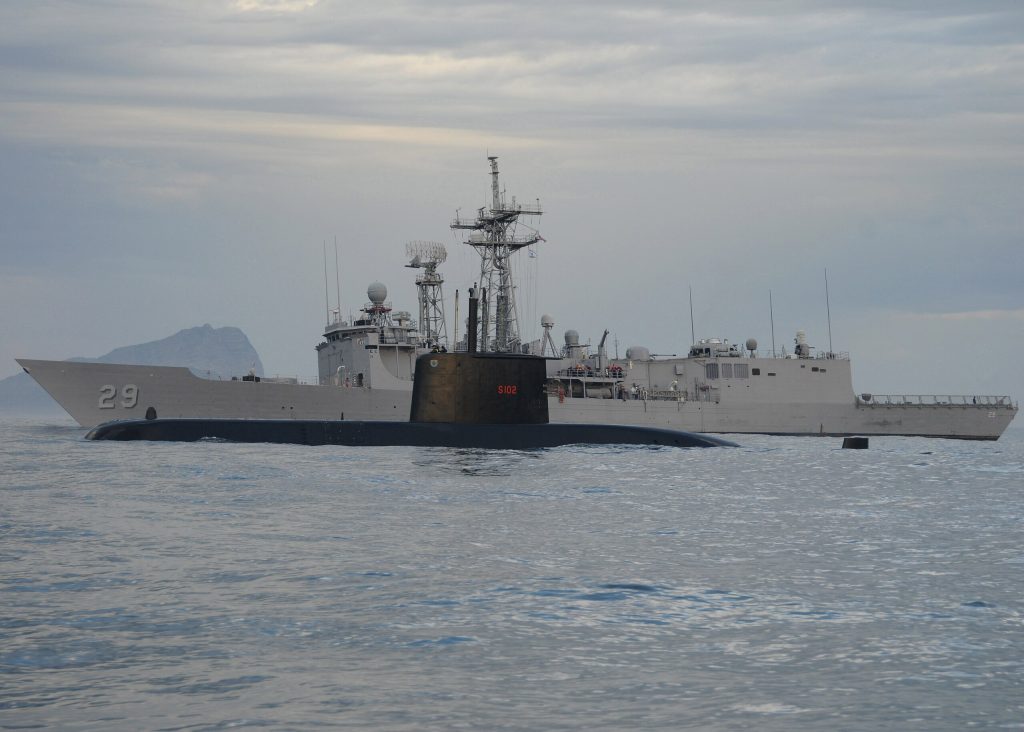
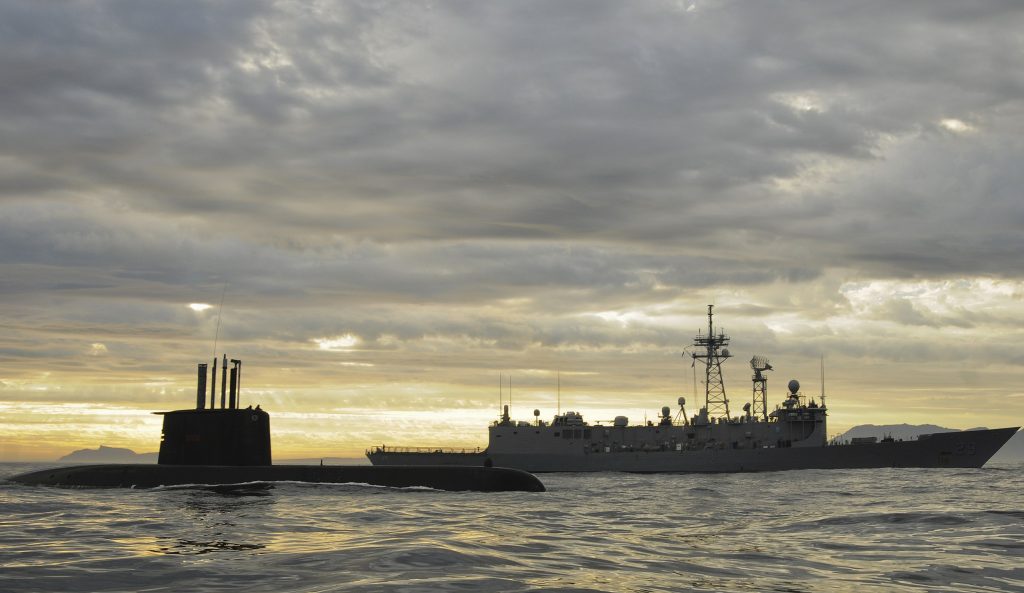
This time, though, the boat is a Type 209 submarine belonging to the SA Navy.
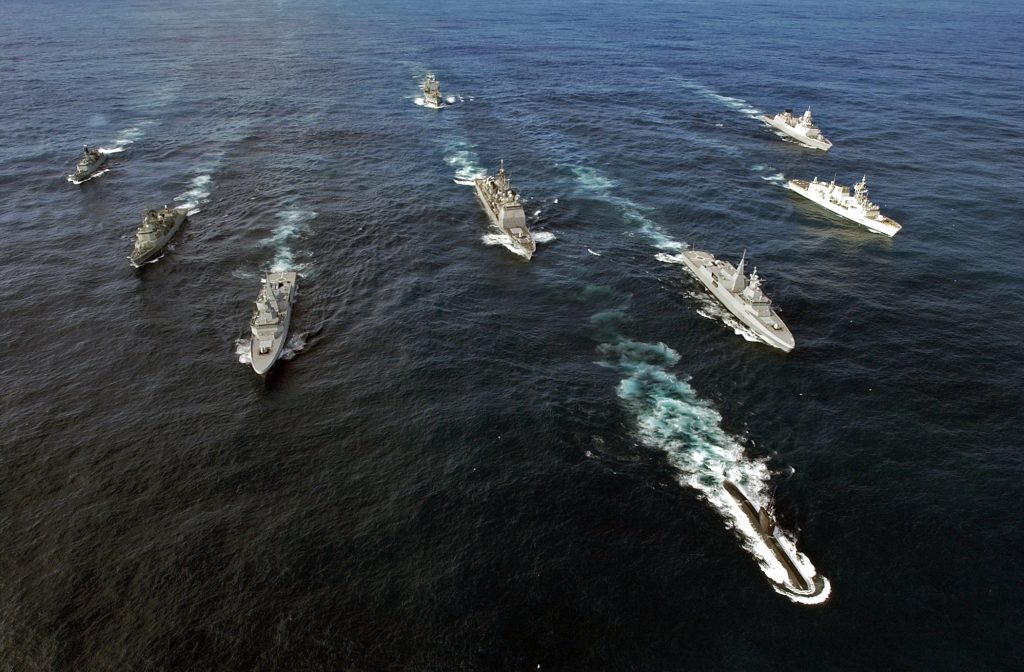
The vessel, on patrol in the same Mozambique Channel where the U-Boats once prowled, is the stealth element of Operation Copper, a Southern African Development Community (SADC) mission to combat piracy and smuggling in the busy shipping lanes down the east coast of Africa.
If deploying a 1,454-ton submarine to seek out pirates in fibreglass speedboats and smugglers in sailing dhows seems like using a sledgehammer on a tiny nail, think again, says defence expert Helmoed-Römer Heitman.
“Submarines have immense value as an intelligence tool,” he says.
During patrols to northern Mozambique, the submarines lurked unseen off the coast and even voyaged into the vast bay at Pemba, a port often used by contraband smugglers.
“They have looked for cooking fires on the beach and determined the ‘pattern of life’ picture,” says Heitman.
Such stealth, which would be impossible with a surface vessel, has allowed security forces to clamp down on piracy and smuggling in the region, he adds.
Using submarines to look for illegal maritime activity is not new, Heitman notes.
One of the SAN submarines was dispatched to Marion Island to keep an eye on rogue Spanish deep-sea trawlers which have plundered the Southern Ocean for Patagonian toothfish.
Canada has also previously deployed submarines to surveil Spanish cod fishing vessels on the Grand Banks and US shrimp boats poaching in Canadian waters while the Colombian Navy has also used submarines to hunt drug runners.
Peace dividends
It is sometimes difficult to talk about South Africa’s submarine fleet given the political blowback that enshrouded the 1999 arms deal.
SA Navy personnel and defence experts are quick to point out that submarines are not, in fact, a luxury or simply a “nice to have” but are instead a vital part of the country’s defence strategy.
“The problem,” says Heitman, “is that politicians fell for the delusion that there will never be another war in southern Africa and, if there was, well then we can catch up quickly.”
Events such as the insurgency in Cabo Delgado in Mozambique, the ongoing wars in Africa’s Great Lakes region and piracy in the Indian Ocean proved the optimists wrong: there would be other wars and South Africa, given its role as a peacekeeper and regional power, would be compelled to take part.
The end of the Border War in 1989 followed by the dawn of democracy for South Africa in April 1994 had resulted in the defence budget being slashed to the bone.
SA’s position at the tip of Africa, with 2,700km of coastline, a sea-route used by ships that cannot transit through the Suez Canal and the responsibility of protecting the Prince Edward Island group in the Southern Ocean mean the country should be a maritime power.
Yet by the time Vice Admiral Robert Simpson-Anderson became chief of the Navy in 1992, the service had for years been last in line for defence spending which skewed heavily in favour of the army as a result of the war in South West Africa (SWA) and Angola.
The three frigates that were once the backbone of the surface feet were long gone — one lost in tragic circumstances during an exercise in February 1982 and others decommissioned and scrapped.
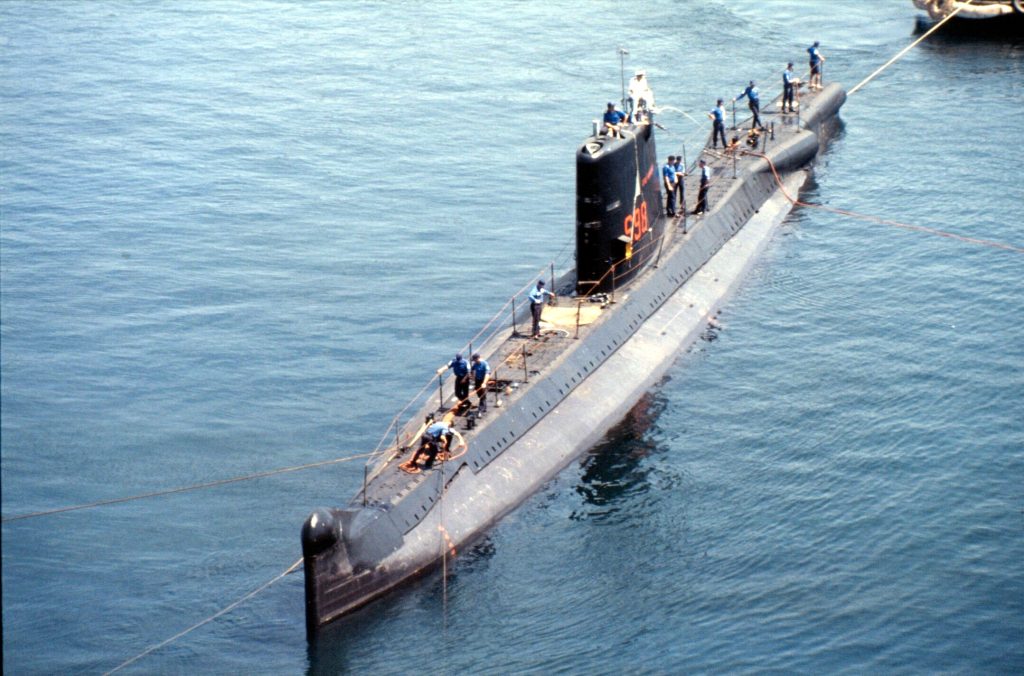
The three Daphné-class submarines, meanwhile, were showing their age. The Daphnés had sailed from France in 1970 and served the SA Navy until 2003 when SAS Umkhonto (formerly SAS Emily Hobhouse) and the last of the three in service was decommissioned in Simon’s Town.
Simpson-Anderson’s priority was to get new surface ships to replace the three long-gone frigates and the fleet of strike craft that were the only combat ships available.
The result was Project SITRON for four new patrol corvettes.
The 1998 Defence Review, however, reaffirmed the need for new submarines to replace the three ageing Daphnés. The quest became Project WILLS which was launched on September 23 1997 when requests for information were sent to four naval shipyards in France, Germany, Italy and Sweden.
Unlike the patrol corvettes which were entirely new designs, the submarines had to be proven types with good service records. They would also have to be supplied with combat suites.
The initial proposal was for four submarines, later reduced to three. On July 12 2000 the government confirmed the deal under which three type 209 submarines would be supplied to the SA Navy.
Simpson-Anderson, who had played a central role in the negotiations, was pleased that the cabinet had selected the Type 209, 50 of which had already been built for other navies.
“It is a class with a fine reputation,” he wrote in his 2021 memoir President Mandela’s Admiral. “The boats should serve the navy well for many years to come.”
Heitman agrees that the Type 209 was the right choice.
“They are good boats,” he says, “arguably the best in the price range.”
The three submarines, dubbed the Heroine class, are named after powerful women in South African history — Queen Modjadji, the Rain Queen, political activist Charlotte Maxeke and Manthatisi, the warrior chief of the Batlokwa tribe.
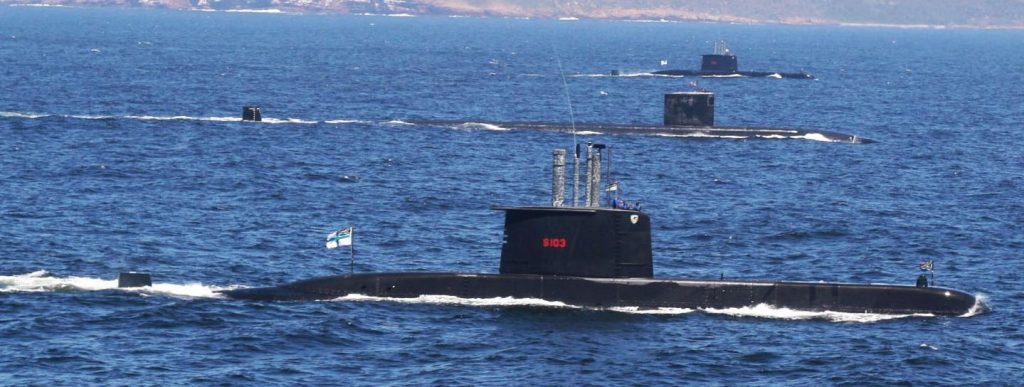
In November 2005, SAS Manthatisi was the first of the three submarines to be commissioned, followed by the SAS Queen Modjadji and SAS Charlotte Maxeke in March 2007.
SAS Manthatisi immediately proved her worth when, during a NATO and SAN naval exercise off Cape Point in September 2007, she slipped through an anti-submarine screen of seven warships and “sank” the vessel they were protecting.
A year later, however, she was placed in reserve following budget cutbacks which meant the navy could keep only two of its three submarines operational.
The cruellest cuts
That the submarines have perhaps fallen short of their potential is, however, the result of years of defence budget cuts which in turn have seriously hampered submarine arm operations.
On May 18, SANDF Chief of Staff Lt Gen FM Ramantswana told Parliament’s Joint Standing Committee on Defence (JSCD) that none of the frigates or submarines was operational due to various defects.
According to a report from Armscor, SAS Manthatisi’s first refit, scheduled to be completed by 2014, was only partially finished by the time the submarine was pressed back into service.
The scheduled mid-life upgrade, which was due to be carried out in 2022, had also not been done, the committee heard.
SAS Charlotte Maxeke, meanwhile, was in the middle of an unfinished refit that was supposed to be complete in 2015 and SAS Queen Modjadji was “undergoing preservation and refit planning activities”. The latter’s refit was originally supposed to have been completed in 2016.
The refits had not been carried out as scheduled due to a lack of parts and spares needed for preventive maintenance, SA Navy deputy chief Rear-Admiral BK Mhlana told the committee.
Poor maintenance meant the vessels would also not be able to reach their service life spans, he added.
National Treasury has allocated R1.4bn to the navy which has ring-fenced the funds to refit SAS Charlotte Maxeke and SAS Queen Modjaji. However, R8.5bn would be needed to upgrade all the frigates and submarines.
Meanwhile, as the Simon’s Town naval dockyard did not have capacity to complete the maintenance work, the funding would allow the navy to source a competent contractor to do the required work, Mhlana said.
An easy target
The recent sight, then, of a submarine seemingly aground in Hout Bay was fodder for the SA Navy’s many detractors. The Twitterverse went crazy, leading to unhinged speculation that the vessel had become lodged on a sandbank and was thus a flag-bearer for the dire state of SA’s armed forces.
Other people thought the vessel was one of the Russian or Chinese submarines that had recently taken part in naval exercises.
It took an expert to point out that the black ball hoisted on the vessel’s mast indicated it was at anchor and that it was using its main diesel engines to recharge its batteries, a process that takes some time.
As it turned out, the submarine in question was SAS Manthatisi. Just days before the vessel had also been spotted in False Bay where its crew were scattering the ashes of a fellow submarine in an old navy tradition — burial at sea.
All that was lost in the noise, however. People preferred the joke.