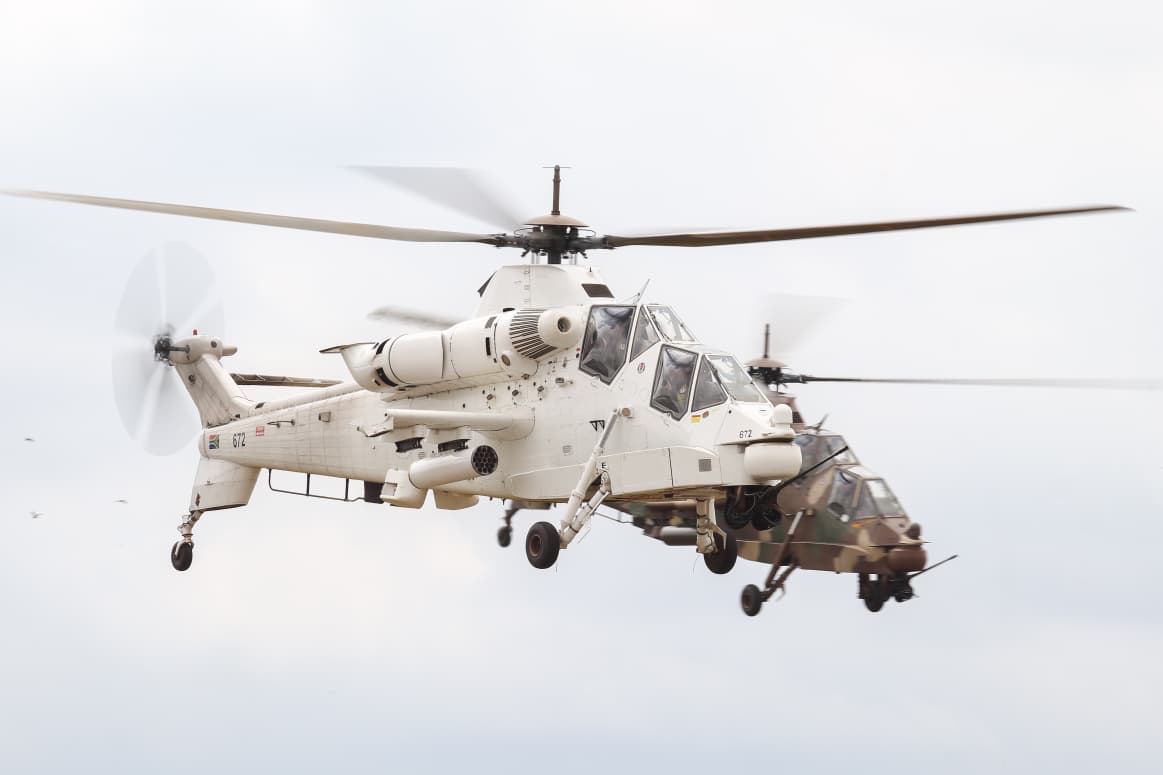
In a recent demonstration of the synergy between air and ground forces, members of the 10 South African Infantry Battalion, deployed under Joint Tactical Headquarters Free State, took part in a series of integrated activities that combined live operational duties with advanced training.
Working alongside 87 Helicopter Flying School, which is currently conducting helicopter training for Agusta 109 pilots, the exercise provided invaluable hands-on experience for both pilots and soldiers. The programme is designed to qualify pilots as Agusta 109LUH helicopter commanders, equipping them with the skills needed to operate in complex dynamic environments.
Helicopters in Action
During the operation, helicopters played a critical role in troop mobility. Soldiers were deployed and extracted from identified hotspot areas along the border between South Africa and the Kingdom of Lesotho, demonstrating how air support can significantly enhance response times. Helicopters also conducted reconnaissance missions, allowing forces on the ground to monitor activity more effectively and respond swiftly to potential threats.
The focus of these operations was not just training but also supporting ongoing security initiatives. By leveraging aerial assets, the military was able to improve visibility, strengthen patrol coverage and contribute to crime prevention efforts including combating livestock theft—a persistent challenge in border regions.
Combining Training with Real Operations
This joint exercise illustrates the strategic value of integrating training with operational deployment. Pilots gained practical mission-relevant flying experience while soldiers improved their readiness and adaptability in real-world scenarios. The collaborative effort underscores how modern air mobility enhances ground operations, providing the South African National Defence Force with a flexible rapid-response capability in sensitive border areas.
As threats along national borders evolve, exercises such as this demonstrate how the SAAF and army units can work together seamlessly to safeguard communities while maintaining operational preparedness. By embedding training within live operations, both pilots and soldiers leave the exercise better prepared, more confident and ready to meet the demands of contemporary security challenges.