The Russian invasion of Ukraine has presented surprises and lessons. The biggest surprises have been the failure of the initial Russian operations, the ability of Ukraine to hold out long enough for western military aid to begin flowing, and the extent to which some Russian equipment depends on western electronics and precision engineering.
By Helmoed Römer Heitman
The Russian invasion of Ukraine has presented surprises and lessons. The biggest surprises have been the failure of the initial Russian operations, the ability of Ukraine to hold out long enough for western military aid to begin flowing, and the extent to which some Russian equipment depends on western electronics and precision engineering.
It is far too early to draw conclusive lessons from this war, but there are some aspects worth serious consideration.
Two obvious lessons are that wars are rarely “over by Christmas” and that Prussian field marshal Helmuth von Moltke was quite correct when he warned that “no plan of operations extends with certainty beyond the first encounter with the enemy’s main strength”.
We can also remember General Dwight D Eisenhower’s admonition that “in preparing for battle, I have always found that plans are useless, but planning is indispensable”. The Russians had a plan but seem not to have done enough planning to quickly develop alternative courses of action.
The first key lesson must be “do not believe your own propaganda”. The Russian plan was clearly based on the belief that there would be no serious resistance, that they would be welcomed, much as the Germans in Austria in 1938. Only that can explain fundamental errors such as invading with a force smaller than the defending forces, failing to forward dump supplies and establish adequate forward medical facilities and the apparent lack of coherent air support plans.
The second and third key lessons are interlinked – “do not believe your own advertising” and “do not assume the opponent is incompetent”. The Russians clearly expected their forces to overrun Ukraine without difficulty. Instead, they encountered determined and often flexible and innovative defence. That blocked them at Kyiv and Kharkiv, blocked the attempt to cross the Dnipro to move on Odessa, and finally forced withdrawals in the north, northeast and later in the south. The loss of the warship Moskva is another example as she was clearly not expecting to be engaged; nor was the landing ship Olenegorsky Gornyak, which made no effort to fend off the approaching boat bomb.
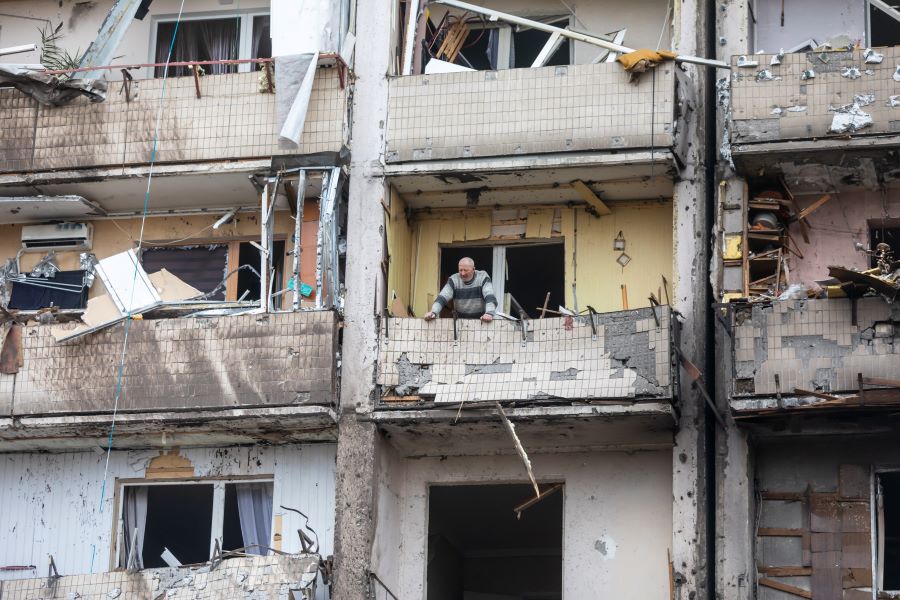
The fourth key lesson must be “do not bet too much on a single special forces operation”. The Russians were not entirely overoptimistic and had a second string to their plan, “decapitation” as in Afghanistan in 1979. There, special forces destroyed the main communications hub, assassinated General Secretary Hafizullah Amin and took control of key government buildings in the course of a morning. It failed in 2022: the special forces encountered unexpected resistance at Hostomel airport and finally had to abandon the attempt.
The fifth key lesson must be “do not bet too heavily on assumptions”. The Russians assumed that NATO would not respond, just as it did not respond when they invaded parts of Georgia in 2008 and seized Crimea and parts of the Donbas in 2014. They certainly did not expect NATO to respond promptly, let alone to the extent it did. That changed the character of the war substantially.
The sixth key lesson must be that “you will need vastly more of everything”. Peacetime assumptions of logistic requirements generally prove to be wildly optimistic. The obvious one is ammunition expenditure, but fuel and spares expenditure, personnel and equipment losses and transport capacity all present unexpected challenges.
These strategic level lessons are obvious and relevant to all countries, but all too often forgotten.
In the South African context:
- The previous government assumed through most of the 1960s that the SADF would never face conventional forces. They were wrong and had to play hasty and costly catch-up.
- The SANDF force design is based on the 1995/96 White Paper and 1997/98 Defence Review, which assumed that it would “never” operate in Africa beyond – perhaps one battalion for peacekeeping for one year. By the mid-2000s there were three battalions plus other Army, Air Force and Navy elements deployed on three long-term missions and briefly a fourth (Comoros 2006) as well as patrols of the Mozambique Channel.
There are also some lessons to be drawn at the operational level.
Coherence and coordination: The Russian invasion was launched on four axes, three of them with diverging sub-axes and – apparently – no single command team. Together with the inadequate force level and a flawed fundamental assumption, that was a formula for disaster. Worse, battalion tactical groups were deployed independently of the parent brigades that should provide coherent command and control and combat and combat service support. Cohesion is critical in operations and largely based on familiarity and mutual trust, which can only be developed from experience of working together.
This is relevant here, as the SANDF has carried on with the bad SADF habit of deploying ad hoc forces under ad hoc command structures and with ad hoc logistic support.
Movement planning and convoy management: Probably a result of the assumption that there would be no serious resistance, there seems to have been little or no thought given to movement planning and convoy management. Witness the famous traffic jam north of Kyiv among others, presenting lucrative targets to small Ukrainian raiding forces.
Does anyone in the SANDF still know how to plan and conduct the movement of hundreds of vehicles on a thin road network? We have begun to again use rail and that is good, but more thought needs to go into this area. Also, does the Military Police still remember that traffic control is their primary mission in wartime?
Logistic support: The key failure here was to plan and prepare for contingencies, mainly that the invasion might not go as planned. That combined with the relatively small truck fleet of Russian formations severely limited the ability to operate at much distance from the nearest railway. Hence vehicles running out of fuel and being abandoned.
Does the SA Army have enough maintenance units and enough trucks to support an extended deployment over an extended distance? What has replaced the specialised maintenance units that once handled bulk fuel and munitions transport for deployed Air Force elements?
Do not bet on secure communications: The Russians’ secure communications system seems to have failed quite comprehensively. Hence reliance on commercial radios and mobile telephones – the latter on the Ukrainian net! The obvious result was poor operational security and helping the Ukrainian targeting system. It is not clear whether the problem was jamming – perhaps by USAF aircraft – or a technical failure, but the lesson is that secure communications are not always secure or even functioning. That has implications for command and control – mission command can work under conditions of limited, sporadic and insecure communications; an orders-based command system cannot. That has major implications for education and training across the entire line of command, from the most senior field commander to the section leader.
Does the SANDF command and control system have contingency concepts and plans for failed electronic communications?
The re-emergence of artillery has produced lessons at the intersection between operations and tactics. One is that precision weapons are wonderful when the target can be precisely located, but of little use when suppressive fire is needed. Suppressive fire, in turn, brings with it the need for vast quantities of ammunition and the means to move it from the depots to forward dumps and then to the guns. The improvement of artillery locating systems has also seriously complicated the employment of artillery, making “shoot and scoot” tactics ever more important. That, in turn, brings complexities for fire planning and fire control, as well as for the delivery of ammunition and the protection of the guns in the absence of continuous front lines.
The SA Army had innovative ideas on the use of artillery. Have those been further developed?
The tactical level has also produced some initial lessons and food for thought.
Realistic training. Russian field training exercises have often looked too heavily choreographed to prepare officers for the reality of combat operations. Their initial performance in Ukraine rather underlined this, including river crossing failures – for instance, attempting to cross at the same spot after having been disrupted by artillery fire on the previous day, and tanks entering built-up areas or close terrain without infantry.
Are our field training exercises choreographed or free play? Given the high cost of realistic field training exercises, we should look at more time spent on war games from simple board games to complex computerised game systems. Command staff at all levels need to go through extended exercises to establish the ability to function under wartime conditions. A three-day combat phase of a brigade exercise is not enough to test those staff.
Minor tactics. There were also minor tactics failures, such as troops exiting vehicles and hiding behind them inside the kill zone of an ambush instead of fighting through the ambush or at least clearing the kill zone. None of this is unique to the Russian Army but does suggest that we should revisit our own training to avoid similar failures as far as possible.
Assuming our training to be good enough is not good enough.
Defence. The Russian Army has demonstrated much greater skill in the defensive, with good use made of minefields, remote minelaying, artillery and attack helicopters. Losses during the opening phase seem to have reduced mechanised forces too much to allow serious counterattacks against stalled Ukrainian attacks, but there is much to be learned here – particularly the remote placing or reseeding of minefields across the enemy’s line of advance, behind his forward elements or to the flanks.
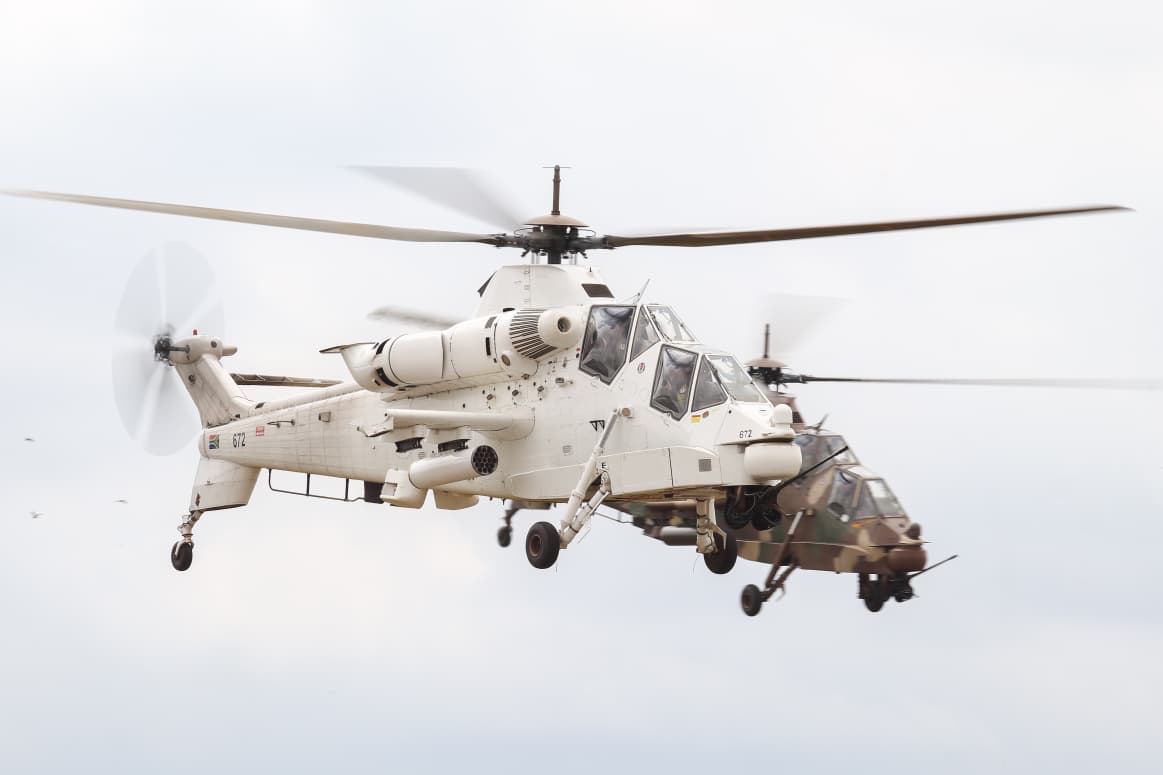
This could be relevant to low force density operations as seen in much of Africa. Multiple rocket launcher systems and long-range artillery offer potential worth exploring and the potential in the Army/Denel/RDM extremely long-range 155mm project would argue for its resumption. Combining the Rooivalk, ambush parties inserted by Oryx and high-mobility forces into a coherent mobile defence systems is another area to develop.
Unmanned vehicles:There has been much made of UAVs in this war and the earlier clash between Armenia and Azerbaijan. Much of that has been hyperbole and overlooked the practical difficulties and the high loss rates, but the value of these systems for reconnaissance, command and control, communications relay and – in some circumstances – attack, has been abundantly demonstrated. The Ukrainian use of unmanned surface craft (and development of unmanned submersible attack craft) has also opened that area for study, while the use of unmanned ground vehicles remains less demonstrated at a practical level.
Overall, there is a clear need to establish a “battle lab” capability in all three combat services to study the potential of such systems and to develop concepts, doctrines and tactics for their employment.
Counter UAV defence. There is an equally clear need to develop concepts, doctrines, tactics and systems to counter UAVs and other unmanned systems. Bearing in mind the use of such systems by guerrillas this is an area that demands urgent attention by the SANDF lest its forces be caught unprepared. Consider remotely operated car bombs (ISIS) and boat bombs (Houthis off Yemen), UAVs for reconnaissance (also in Mozambique), command and control (ISIS in Syria and Iraq) and light attack using small bombs or even weapons such as RPGs (ISIS). The Ukrainians have found the Gepard self-propelled twin-35 system and improvised light anti-aircraft systems using heavy machine guns to be effective, as well as electronic warfare systems. Autonomous UAVs may, however, need an EMP system to disrupt their electronics and such systems are already in use and further development.
In closing it is worth saying that neither this war nor that between Armenia and Azerbaijan has demonstrated the “death” of the tank or other armour, no more than did the 1973 Middle East war that was then hailed as “the death of the tank”. The infantry soldier has been vulnerable to every weapon on the battlefield since wars began but remains a critical element of all armies. Armour in the sense of mobile, protected firepower will have to adapt but will remain necessary and effective.